Direct Translations
Magpie swarmed as Trump got out of his car! The CCP camera, however, desperately tried to hide Rubio
Reporter : Wang Duoruo / Editor : Zhongkang / https://www.aboluowang.com/2026/0514/2383693.html
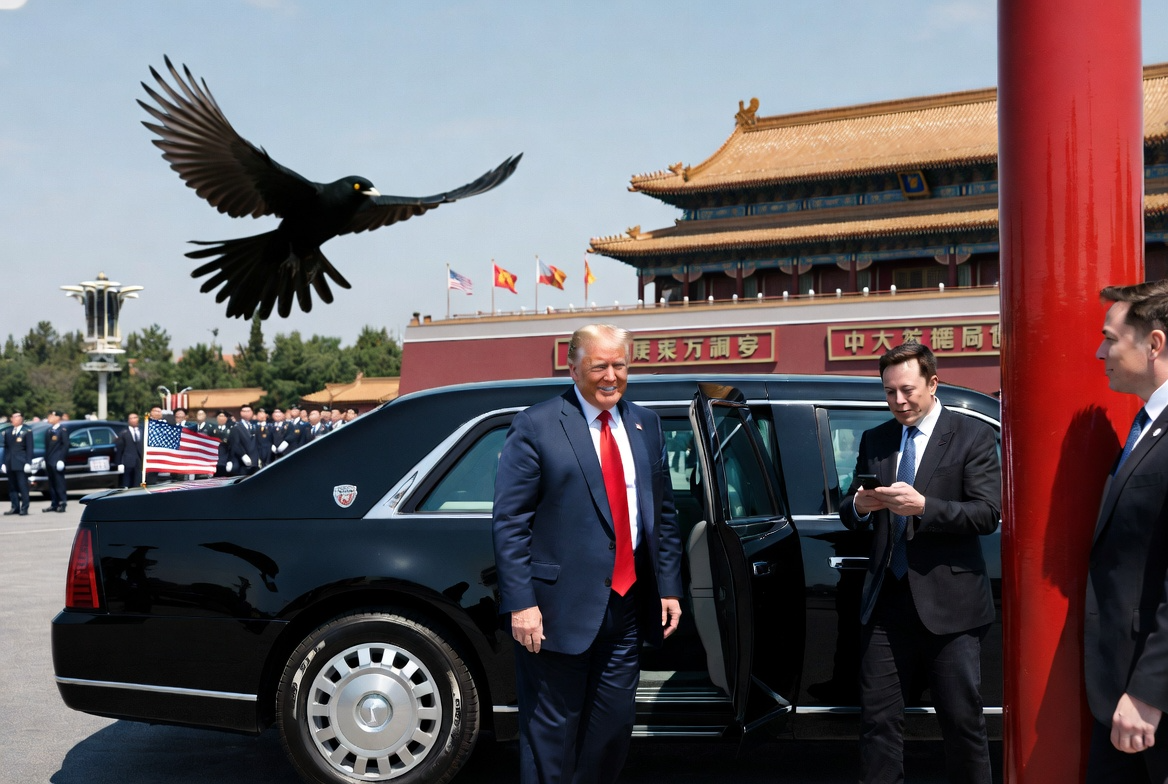
After U.S. President Trump arrived in Beijing on 13 May 2026, a short video suddenly went viral on the Chinese internet. The footage shows a magpie flying across the scene the instant Trump stepped out of his car at Tiananmen Square, prompting many netizens to exclaim, "This is too mysterious!"
An account on the X platform, "Mr. Tao Miao," posted: "Sharp-eyed netizens noticed that a magpie flew over the instant President Trump got out of his car! It seems Mr. Trump is bringing good luck to the Chinese people."
Since magpies have long been regarded as symbols of "bringing good news" and "changing one's fortune" in Chinese folklore, this scene quickly sparked numerous interpretations. Netizens joked: "Even the celestial phenomena in Beijing are starting to take sides?" "The magpie knows who's coming." "The people have really been waiting for change for too long."
Meanwhile, another video from the scene also caused a stir online.
In the video, the atmosphere among the U.S. entourage was noticeably relaxed, a stark contrast to the serious and tense atmosphere on the Chinese side. Some people were chatting and laughing together, while Elon Musk, the world's richest man, was even filmed walking around while using his phone and taking photos. "Mr. Tao Miao" joked, "Compared to the CCP personnel, the American staff are far too relaxed. Musk went even further, simply playing with his phone and filming everywhere in circles."
However, what made netizens even more amused was the "little trick" in the official CCP footage.
"Mr. Tao Miao" later posted again, "I just noticed that in the video provided by the CCP, the photographer deliberately chose a tricky angle, having a pillar completely obscure Rubio. So that when it's released, people inside the Great Firewall won't be able to see that Rubio is there?"
The footage shows U.S. Secretary of State Rubio almost entirely obscured by the pillar, with only part of his figure visible. Because Rubio has long been criticized by CCP state media and even sanctioned by the CCP, this footage was immediately subject to wild interpretations by netizens.
Some joked, "This is a physical shield for Rubio." "The pillar is carrying too many political burdens." "Rubio himself wasn't blurred out, but he's almost there."
Other netizens sarcastically remarked, "The CCP's abilities are limited to these petty tricks."
As Trump's visit to Beijing continues to heat up, from "a car full of American flags entering Beijing," to "Musk using a VPN to post nonsense," to "magpie flying in" and "the pillar blocking Rubio," various dramatic scenes have been flooding social media, making this Trump-Xi meeting, even before it has officially begun, already filled with a strong sense of tension and absurdity.
White House releases Summary of Trump-Xi Meeting, Taiwan Issue Not Mentioned
https://news.ltn.com.tw/news/world/breakingnews/5437082 / Image : Trump and Xi Jinping pose for a photo in front of the Hall of Prayer for Good Harvests, the main building of the Temple of Heaven.T(Associated Press)

U.S. President Donald Trump and Chinese President Xi Jinping held a summit this morning (May 14) in the East Hall of the Great Hall of the People in Beijing. The White House released a summary of the talks earlier, which made no mention of Taiwan.
According to The Guardian, White House officials released meeting minutes this afternoon regarding the Trump-Xi meeting. The two sides discussed bilateral trade relations, including expanding opportunities for U.S. companies to enter the Chinese market and increasing Chinese investment in U.S. industries. Executives from several large U.S. companies also participated in some of the discussions.
The two leaders also mentioned the Iran war. Both sides agreed that the Strait of Hormuz must remain open to support the free flow of energy. Xi Jinping also clearly stated that China opposes the militarization of the strait and any attempt to impose tolls on its use. Furthermore, he expressed interest in increasing purchases of U.S. oil to reduce China's future dependence on the Strait of Hormuz. Both countries also agreed that Iran must never possess nuclear weapons.
The White House also stated that Trump and Xi Jinping emphasized the need for continued efforts to curb the flow of fentanyl into the US, and that China should increase its purchases of US agricultural products. Throughout the meeting, the highly anticipated Taiwan issue was not mentioned.
Previously, many analysts bluntly stated that the best-case scenario for Taiwan from the Trump-Xi meeting was that the Taiwan issue would be "marginalized" in the dialogue between these two powers. The ideal scenario for Taiwan would be if Trump did not make any restrictive commitments regarding arms sales or visits to Taiwan by officials in front of Xi Jinping, and if the U.S. side downplayed or even completely omitted the Taiwan issue in the post-meeting statement.
Xi Jinping crits U.S. handling of "Taiwan Issue": Scholar reveals unusual signals – U.S. reaction completely silent
Reporter : Chen Yun, Taipei / https://news.ltn.com.tw/news/politics/breakingnews/5437038
U.S. President Donald Trump and Chinese President Xi Jinping met in Beijing today. Yeh Yao-yuan, Professor of International Studies at the University of St. Thomas, believes that the lack of a post-meeting statement from Chinese state media, which claimed that China mentioned the "Taiwan issue" but made no mention of the U.S. reaction, suggests that the US reaction was "unreported by Chinese state media." This implies that the talks likely went very poorly, with no consensus reached.
Yeh Yao-yuan shared several observations after the Trump-Xi meeting today. First, China provided a grand reception, giving Trump ample face. Trump, in his opening remarks, consistently praised Xi Jinping. However, a grand facade doesn't guarantee substantive agreements were reached; in this case, the substantive discussions likely fell short.
Yeh Yao-yuan further stated that typically, at such summits, bilateral diplomats reach a consensus on all topics beforehand, and there are post-meeting statements outlining the conclusions. However, nothing has been reached so far, which is an unusual signal, indicating that the two sides have discussed for a long time without reaching a consensus, thus preventing a concluding statement.
Yeh Yao-yuan believes this is actually an outcome Trump anticipated, or something he wanted to achieve. As a successful businessman, he believes no one is better at negotiating than him. By bringing a group of American tech industry leaders to meet with Xi Jinping, he wanted to send the message: if you want to do business with them, you must be friends with me and safeguard American national interests.
Yeh Yao-yuan stated that the United States' national interests are precisely what China wants to undermine, including the security of the first island chain, American hegemony, and its technological leadership. Therefore, it is predictable that after a long period of discussion, no results will be achieved, not to mention that figures like Secretary of State Rubio, a "frontline anti-communist worker," will be playing a key role. Even if China provides Trump with a grand show of support, it will not gain anything.
Regarding Chinese state media's claim that China directly told the U.S. that "if the Taiwan issue is not handled properly, the two countries may clash," Yeh Yao-yuan said it's interesting that Chinese state media completely omitted the U.S. reaction, indicating that the U.S. reaction "cannot be reported by Chinese state media." The U.S. will likely, as in the past, reiterate that the security of the Taiwan Strait and the first island chain is in the national interest of the United States, without specifying what the U.S. will or will not do—but this is not what China wants to hear.
Yeh Yao-yuan summarized the meeting by saying that it "started strong but ended weakly." It seemed like there was a lot to discuss, but anyone who understands international politics and knows that the United States and China are in a state of hegemonic competition knows that the US-China relationship will not undergo any qualitative change, just like the U.S. and the Soviet Union during the Cold War. The relationship only changed after the collapse of the Soviet Union.
A historic moment! Surpassing Putin! The CCP receives Trump with extremely high-Level treatment
—Han Zheng's airport reception surpasses Putin's: China's high-level reception of Trump sends a signal
Reporter : Wang Duruo / Editor : Fang Xun / https://www.aboluowang.com/2026/0514/2383593.html / Image : Web Screenshot
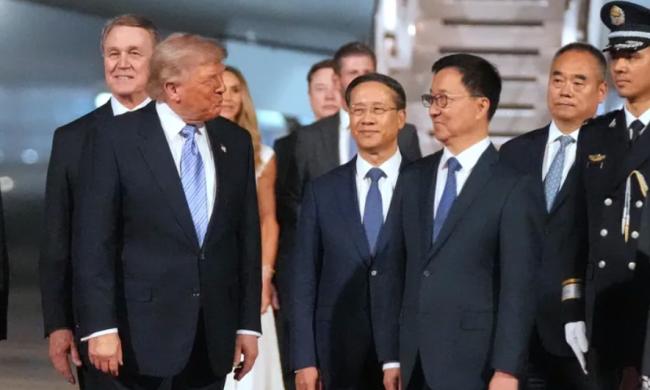
U.S. President Trump arrived in Beijing in the evening of 13 May 2026. The level of hospitality extended by the Chinese Communist Party (CCP) has been described as "far exceeding that of 2017," and even significantly higher than that of Russian President Putin.
Around 7.50 pm that evening, Trump landed at Beijing Capital International Airport aboard Air Force One. The CCP not only laid out a red carpet but also arranged for hundreds of teenagers and a welcoming band to greet him, demonstrating an extremely high level of protocol.
The most attention was focused on those who personally greeted him at the airport.
This time, the CCP directly dispatched Vice President Han Zheng to the airport to greet Trump, accompanied by Chinese Ambassador to the US Xie Feng, Vice Foreign Minister Ma Zhaoxu, and US Ambassador to China Pound.
For those familiar with the CCP's political system, this was far more than just ordinary courtesy.
Han Zheng previously served as a member of the Standing Committee of the Political Bureau of the CCP Central Committee and First Vice Premier of the State Council, a "state-level" leader, significantly higher in rank than Foreign Minister Wang Yi.
When Trump first visited China in 2017, he was greeted only by then-State Councilor Yang Jiechi, a vice-state-level official. Now, Beijing has raised the protocol even higher, which is widely seen as a deliberate political signal from the CCP.
Even more intriguing is that this treatment surpasses that given to Putin.
In recent years, Putin's visits to Beijing have mostly been greeted by vice-state-level officials, while Trump received a "state-level" reception this time, a stark contrast.
Many analysts believe that Beijing's primary need now is not a complete break with the US, but rather to stabilize the situation as much as possible. Currently, the US and China are engaged in fierce competition over trade, AI chips, Taiwan, the Middle East, and global supply chains. The CCP clearly hopes to ease external pressure through the Trump-Xi meeting, hence the unusually high level of protocol.
Meanwhile, Trump's "dream team" has also attracted attention.
In addition to hardliners like Rubio, Greer, and Hergé, Elon Musk, the world's richest man, was also photographed closely following Trump as he stepped off Air Force One. Footage from the scene shows Musk even standing right next to Donald Trump Jr. and Jensen Huang.
Many netizens exclaimed:
“The American Dream Team has stormed into Beijing!”
“This lineup doesn’t look like a visit, it looks more like they’re here to negotiate and collect debts.”
“Beijing has really gone all out with the highest level of protocol this time.”
Dingzhong
@dingzhonggood
· 6 hours
Xi Jinping is like an obedient schoolboy; Trump glances at him, and he takes his hand out of his pocket. Haha 😊
United States Position (U.S. P)
@WizarGod
· 6 hours
Here’s a secret for you: even more exciting visuals will be captured this time!
Banana
@Bananax01
· 3 hours
This footage confirms that Xi Jinping is indeed a country bumpkin.
Iran groans! Trump receives a huge gift while in Beijing
—U.S. Senate rejects bill; Trump, in Beijing, receives a major gift
Editor : Fang Xun / Source : Central News Agency / https://www.aboluowang.com/2026/0514/2383613.html
The U.S. Senate on 13 May 2026 narrowly rejected a resolution limiting President Trump's war powers against Iran. This was the first vote on the conflict in Congress since the 60-day congressional authorization period for the war expired.
According to AFP, the proposal, introduced by Oregon Senator Jeff Merkley, was the seventh attempt by Democrats to restrict Trump's war powers since the conflict began 10 weeks ago, all of which failed. The vote was 50-49.
Democrats pointed out that, according to the War Powers Resolution, the administration must obtain congressional authorization by 1 May 2026 after Trump notified Congress of his intention to take military action against Iran in early March.
Three Republican senators voted in favor of the resolution, one more than in the April vote, allowing Trump to narrowly retain his victory at 50-49.
Democratic Senator Tim Kaine said, "There's another vote next week, and the week after that. We will continue to pressure Republican lawmakers to address this issue."
The War Powers Act has always been difficult to enforce, with courts typically reluctant to intervene in power disputes between Congress and the White House regarding military operations.
Even if the resolution ultimately passes the Senate, it will face significant resistance in the Republican-controlled House and could potentially be vetoed by Trump.
Rumours circulate that the Trump-Xi teams have reached an agreement! Jimmy Lai has been released from prison, and Xi is demanding her replacement
Reported by : Sheng Xue / Editor : Li Hua / https://www.aboluowang.com/2026/0513/2383334.html
Urgent Update!
Xi Jinping's leadership team and President Trump's advance team have reached an agreement for Jimmy Lai to be released from prison on medical parole, in exchange for Xi Jinping's demand that Wang Ailin return to China.
Wang Ailin has resigned from her positions as mayor and city council member of Arcadia, California, and has agreed to plead guilty in federal court to felony charges of acting as an "illegal agent of the CCP."
Why is Xi Jinping going to such lengths to secure Wang Ailin's release? Primarily because she has long been involved in infiltrating, cultivating, and buying off American politicians, especially high-ranking members of the California Democratic Party…
It is worth noting that in addition to the "illegal agent" behavior mentioned in the plea agreement, the investigation has also revealed the following related information:
1. Related Person (Mike Sun): The key person related to this case is her former fiancé and campaign advisor, Yaoning "Mike" Sun. Sun pleaded guilty to the same charges in October 2025 and was sentenced to four years in federal prison in February 2026.
2. Specific Espionage Activities: Wang Ailin and Sun jointly operated a website called "American News Center." Evidence shows that they received article links directly from Chinese officials and published them, subsequently reporting the number of clicks to them.
Targeting Specific Groups: Sun was previously accused of collaborating with another spy, Chen Jun (who has already been sentenced), to plan the suppression of specific spiritual groups within the United States.
3. When Sun Yaoning was initially arrested, Wang Ailin vehemently denied any involvement. In September 2025, she publicly declared that Sun "was not her fiancé," but in a 2022 city council video recording, she personally thanked "my fiancé, Mike Sun."
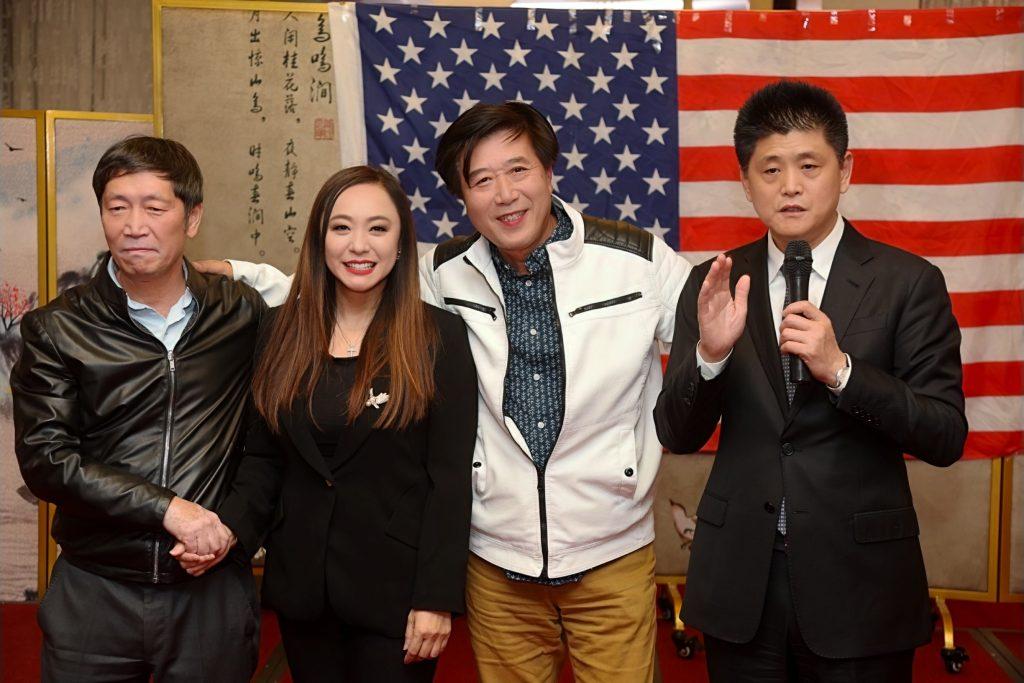
Image : The CCP used her then-fiancé, Sun Yaoning (second from right), to conduct espionage activities against Taiwan through the United States. The photo shows Wang Ailin posing with Sun Yaoning and others after being sworn in as an Arcadia city council member on 11 December 2022, presided over by Democratic Congresswoman Judy Chu.
The "Strategy Within a Strategy" of Trump's Return to Beijing
Editor: Li Guangsong / Source : Epoch Times / https://www.aboluowang.com/2026/0514/2383468.html
Nine years later, US President Donald Trump once again walked the red carpet in Beijing. However, behind this diplomatic grandeur, the atmosphere was unusually strange.
The Trump-Xi Meeting amidst Middle East tensions
On the one hand, the tensions in the Middle East remain high. The clash between the US and China over Iran is escalating from a cat-and-mouse game over oil transport blockades to a direct confrontation between U.S. secondary sanctions and China's "blocking measures."
On the other hand, U.S. officials have recently been sending mild signals that "decoupling is a disaster." Does this suggest an intention to "make peace" with Beijing in response to domestic inflationary pressures?
Things may not be so simple. This could very well be a "political anesthetic" administered to appease the opponent.
The essence of this US-China summit will not be a heartwarming tale of restarting globalization, but rather a struggle for the "final pricing power" in the great power game.
Trump brought Beijing not a peace package, but a "precision-guided" economic noose, officially opening the curtain on Cold War 2.0.
Trump uses "No Decoupling" as a cover for "Cold War 2.0"
US Treasury Secretary Bessant has repeatedly emphasized that the core of the Trump administration's current economic policy towards China is not "decoupling," but rather "risk mitigation."
The strategic logic is to build a new iron curtain of "strategic sovereignty" around the four "lifeline" industries: defense, healthcare, advanced AI packaging, and key minerals.
The so-called "risk mitigation," in essence, is to isolate China from core technologies and the dollar system.
President Trump, as a self-proclaimed "deal master," employs a game of strategy akin to a circus animal taming: both hold a tempting piece of meat in one hand and an electrified whip in the other.
"No decoupling" as bait; orders as "protection money"
Clearly, the recent "no decoupling" signals released by Bessant and other high-ranking officials are bait thrown out by the US.
Meanwhile, Trump threatened to reinstate extreme tariffs of up to 125%, inducing Beijing to sign massive purchase agreements in exchange for a temporary "trade truce."
These agreements are expected to include a commitment to purchase 25 million tons of US soybeans annually over the next three years, and up to 500 Boeing passenger aircraft (including the 737 Max).
For the US, this is a perfect "economic drain"—Trump not only precisely appeased the US agricultural stronghold and aviation giants, alleviating domestic inflationary pressures, but also massively depleted China's foreign exchange reserves accumulated from its projected $1.2 trillion trade surplus by 2025.
For the CCP, this is a "political protection fee" forced upon them to "buy time to survive" amidst internal strife and economic stagnation.
Locking off technology, raising the Iron Curtain of Cold War 2.0
While Beijing obediently paid the bill, hoping to gain breathing room, the US embargo on high technology not only did not ease, but tightened even further.
In April 2026, the U.S. Federal Communications Commission (FCC) voted to ban Chinese laboratories from certifying electronic products sold in the U.S. The Treasury Department also imposed a comprehensive ban on U.S. entities investing in China's AI, quantum computing, and advanced semiconductor industries.
The Commerce Department's Bureau of Industry and Security (BIS) has recently been rigorously investigating third-party transshipment points in the Middle East and Southeast Asia, cracking down on "shadow agents" smuggling AI chips to China.
The U.S. is simultaneously receiving payments from Boeing and soybeans while tightly controlling the export of advanced semiconductors and AI computing power.
Although the current U.S. administration has not explicitly designated China as an "enemy," this dual-track strategy of "economically draining and strategically crippling" directly blocks China's attempt to use "new-type productivity" to dump excess capacity globally.
This also signifies that the iron curtain of an economic cold war has effectively risen.
A head-on clash between China and the U.S.: The U.S. throws an "Energy Noose"
If trade was the appetizer at the Trump-Xi meeting, then Middle Eastern oil is the bomb that could explode at any moment on the negotiating table.
Before his trip abroad, Trump repeatedly demanded that China "take action" on the Iran issue. Bessant also pointed out in early May that China, which purchases 90% of Iran's energy, is a de facto "financier of terrorism."
The de facto blockade of the Strait of Hormuz caused by the Iran war has significantly amplified the economic impact of this energy crisis on various countries, including the United States and China.
Therefore, Trump will likely make the Iran issue and the Strait of Hormuz's reopening a key demand of the US, forcibly "outsourcing" energy security costs to China and compelling Beijing to take the fall.
As for whether the CCP has the possibility or the confidence to refuse this demand?
This is the key to great power competition: in this crisis, who is more resilient—China or the United States?
According to research by European think tank Bruegel and the British newspaper *The Guardian*, China had stockpiled a record 1.4 billion barrels of crude oil reserves before the crisis, enough to offset imports via the Strait of Hormuz for seven months.
This may be the reason why China has not yet budged on the Iran issue with the United States. Even though the Straits blockade has already had a significant impact on the Chinese economy, especially private enterprises,
The United States has already taken action.
First, the U.S. initiated a "maritime blockade." Starting April 13, the US military blockaded all ships entering and leaving Iranian ports and is currently monitoring over 70 oil tankers; among them, China's "shadow fleet" is under special scrutiny, being tracked around the clock by satellites and US destroyers.
By early May, the US military had conducted "surgical" strikes, attacking and disabling several Iranian oil tankers attempting to break through the blockade, including those belonging to China's shadow fleet.
China's massive "shadow fleet" has long been transporting discounted Iranian crude oil to the "Teapot" underground refinery in Shandong. This is not only a lifeline for the Iranian regime but also the lifeblood for the CCP to maintain its advantage in cheap manufacturing.
The U.S. military is not the only one pursuing China's "shadow fleet."
On 24 April 2026, the U.S. Treasury Department's Office of Foreign Assets Control (OFAC) formally sanctioned Dalian Hengli Petrochemical and its related "teapot" refineries, as well as 40 shipping entities and related vessels, accusing them of forming a "shadow fleet."
On 11 May 2026, the U.S. Treasury Department announced its latest round of sanctions, sanctioning 12 entities and individuals located in Hong Kong, Dubai, and Oman, accusing them of assisting Iran in transporting crude oil to China.
This series of high-frequency, high-intensity sanctions and maritime blockades is the energy noose that the Trump administration has hurled at China. Its effect is twofold: on the one hand, cutting off the lifeline of the Iranian regime; on the other hand, strangling China's advantage in cheap manufacturing.
Beijing, however, does not seem to be sitting idly by, but has chosen to confront the situation openly.
On 4 May 2026, the Chinese Ministry of Commerce, for the first time, invoked the "Blocking Measures" promulgated in 2021, directly ordering domestic companies to disregard U.S. sanctions, staging a head-on "sovereign-level default."
However, behind the scenes, Chinese financial regulators have issued verbal instructions, a so-called "window guidance," instructing large banks to suspend new loans to sanctioned "teapot" oil refineries.
This reflects Beijing's extreme fear of the secondary sanctions risk of being kicked out of the SWIFT dollar clearing system—a risk often referred to as a "financial nuclear bomb."
US-China Stress Test: Who will suffocate first?
Trump is attempting to force China to cut off financial support to Iran through tariffs and sanctions, but Xi Jinping does hold a trump card: key minerals, namely rare earth elements.
According to research by institutions such as PwC and the Center for Strategic and International Studies (CSIS), the US defense industry is 92% dependent on China for rare earth processing.
While the US government has implemented various national strategies in the key mineral sector, these are indeed insufficient to address the immediate crisis.
So, with both sides holding each other's short-term bottlenecks and lifelines in check, who can withstand a direct confrontation?
Let's conduct two extreme stress tests.
The first extreme test: If negotiations on the Iran issue break down and the US imposes a full-scale blockade and sanctions, how long can China withstand it?
According to data from think tanks such as Bruegel, China's energy reserves can theoretically last for seven months, seemingly preventing an immediate collapse of society and infrastructure.
However, the collapse in external demand triggered by U.S. sanctions would be devastating to China's manufacturing and export economy.
In a more extreme scenario, if the U.S. imposes financial sanctions on Chinese state-owned banks (kicking them out of the SWIFT dollar system), it would immediately plunge China into a catastrophic economic crisis. The current decline of Iran and Russia is the bitter fruit of swallowing this financial nuclear bomb.
The second extreme test scenario: If China completely cuts off rare earth exports, how long can the US withstand it?
Although the U.S. has consistently stated that its weapons reserves are sufficient, due to the large amount of advanced weaponry it has consumed in the wars in Ukraine and the Middle East, it urgently needs to replenish precision-guided munitions, interceptor missiles, and advanced electronic equipment.
Based on research from the Council on Foreign Relations and other institutions, the production of these advanced weapons is currently highly dependent on the rare earth ecosystem dominated by China. Once disrupted, the Pentagon's weapons supply lines would quickly dry up. Therefore, this scenario is clearly something the US government does not want to see.
However, this does not mean that the U.S., like China, is unable to withstand extreme pressure.
According to the International Monetary Fund's (IMF) April 2026 World Economic Outlook, a severe rare earth supply disruption would lead to a 1.5% decline in US GDP.
In other words, facing the extreme scenario of the CCP cutting off rare earth supplies, the U.S. military's weapons supply lines would be temporarily depleted, potentially triggering a US economic recession, but the impact would not be enough to cause a systemic economic collapse.
The Trump-Xi meeting in May 2026 is by no means a turning point in Sino-U.S. relations. This "trade list," which includes a tacit agreement to exchange millions of tons of soybeans for rare earths in exchange for chips, is essentially an extreme pressure exercise under the premise of "competitive coexistence."
The United States is waging a highly patient "asymmetric Cold War," offering the CCP the bait of "no decoupling," which is in reality an economic strangulation the latter cannot refuse:
Under the guise of maintaining low-end trade, it is implanting a "risk-de-escalation" virus into its system, cutting off the CCP's access to high technology and capital from the outside.
In this extreme test, the conclusion of the game is self-evident: the United States is clearly more resilient than the CCP.
If the game reaches its final suffocation point, the first to be eliminated will only be the CCP.
Twelve countries have sided with the United States, causing the CCP's painstakingly constructed strategy to collapse completely
Editor : Fang Xun / Source: Newtalk / https://www.aboluowang.com/2026/0514/2383653.html / Image : On the evening of 13 May, U.S. President Trump arrived in Beijing aboard Air Force One, looking serious. (Alex Wong/Getty Images)
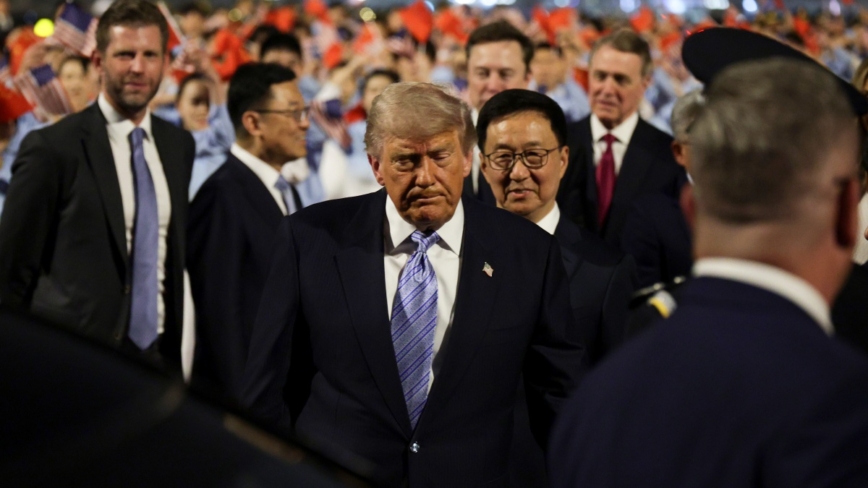
Despite Xi Jinping's pronouncements of "Eastward Rise and Westward Decline," suggesting the rise of the Eastern bloc represented by China and the decline of the Western world led by the United States—implying China's replacement of Western hegemony—the reality is that US President Trump is solidifying America's unwavering pursuit of hegemony in the Western Hemisphere, while the foundations of Beijing's massive Belt and Road Initiative, a plan built over a decade, are increasingly crumbling.
An article in the *Nikkei Asian Review* analyzes that Trump has triggered a domino effect in Latin America. Since taking office for his second term, pro-American governments have been established one after another in the region, and China's economic influence has continued to decline.
The report first uses Cuba as an example to depict China's fatigue.
Since January, the lives of the Cuban people have been precarious due to the Trump administration's maritime blockade of Cuban oil tankers. It is said that the U.S. is seeking a "bloodless surrender," waiting for the Cuban government to voluntarily lower its anti-American flag.
The Chinese government condemned the US, expressed opposition to "external interference in Cuba's internal affairs," and demonstrated its support for Cuba. China has also repeatedly criticized Trump's energy blockade imposed after the January attack on Venezuela, which cut off Cuba's oil supply. However, compared to the Biden administration, China's actions during the Trump era have been significantly more restrained. In 2023, rumours circulated that China was preparing to build military training facilities and reconnaissance bases in Cuba. Such activities have decreased since Trump's return to the U.S. presidency in January 2025.
China's Belt and Road Initiative has encountered strong resistance in Latin America after Trump's return: the Donroe Doctrine (combining Trump's name with the 19th-century Monroe Doctrine, centered on a hardline "America First" policy, viewing the Western Hemisphere as America's direct hinterland and "strategic backyard," employing aggressive means to maintain US dominance in the Western Hemisphere, ensure resource supply chain security, and contain the influence of China and Russia in the region).
The report points out that the Xi Jinping administration has been advocating the Belt and Road Initiative, a massive economic zone project, since 2013, and has gained support from Latin American countries. Besides Brazil and Mexico, more than 20 countries have expressed interest in participating, and Chinese capital continues to expand into regions considered America's "backyard."
In January, the Trump administration launched a raid on the Venezuelan capital, kidnapping President Maduro and successfully establishing a pro-American regime, just as it had anticipated. Fearing Trump's "Donaroism," Latin American countries are vying to adopt more pro-American stances.
Following the January attack on Venezuela, Panama, a Central American nation, revoked in February its earlier grant of management rights to two ports around the Panama Canal to a Hong Kong company, citing contractual breaches. Despite strong protests from China, the Panamanian government, constrained by the U.S.-China conflict since Trump took office, is unlikely to back down. Panamanian President José Raúl Mulino also announced Panama's withdrawal from the Belt and Road Initiative.
Since 2025, major Latin American countries have successively established new pro-American governments: Honduras and Costa Rica in Central America, and Chile and Bolivia in South America. During this period, no pro-China Latin American regimes have been established, and the "pink wave" that swept through the late 2010s is now a distant memory.
In the November 2025 Honduran presidential election, Trump intervened at the last minute, pardoning the former president imprisoned in the US for drug trafficking and other crimes, helping his supported center-right candidate win. Newly elected President Nasry Asfura stated that he would consider restoring trade with Taiwan.
Following Mexico, Colombia also imposed tariffs on steel and other products from China in March. Many Latin American countries, especially Mexico, are heavily reliant on U.S. exports, making it difficult for them to prioritize China.
In March, the presidents of 12 pro-US Latin American countries attended the "Shield of the Americas Summit" hosted by Trump at his Florida golf club. Trump declared spiritedly, "We will not allow hostile foreign powers to gain a foothold in this hemisphere."
Elon Musk personally bypasses the Great Firewall to post! The CCP's internet censorship is publicly humiliated globally
Reporter : Wang Duruo / Editor : Wang He / https://www.aboluowang.com/2026/0514/2383677.html
After American tech billionaire Elon Musk arrived in Beijing with President Trump, his X account activity unexpectedly sparked a heated debate. Many netizens discovered clear VPN connections on Musk's X account page when he updated content from within China. Observers believe this wasn't an "accidental exposure," but rather a deliberate public satire of the Chinese Communist Party's (CCP) internet censorship.
After all, as the founder of Starlink, the world's most advanced satellite network, Musk possesses top-tier global communication technology resources, yet he still had to use a VPN to access his own platform, X, in China. This stark contrast was seen by many netizens as a direct slap in the face to the CCP's "Great Firewall."
Some bluntly stated, "Musk is deliberately showing the world just how extensive the CCP's internet censorship is." Others sarcastically remarked, "The world's richest man, the founder of Starlink, still has to use a VPN in Beijing; the image itself is humiliating enough."
Data shows that Musk's Starlink has not yet obtained radio frequency and telecommunications operation licenses from the CCP, thus preventing its legal operation in China. Despite Starlink's current coverage in over 150 countries, it remains completely blocked in China.
A well-known account on the X platform, "Teacher Li is Not Your Teacher," also posted a sarcastic comment, saying that Musk's experience was a firsthand demonstration of the Chinese Communist Party's internet censorship. Observers believe that Musk's direct exposure of his VPN activity is a silent irony: even with today's technological advancements, under the CCP's highly censorial system, even the world's top tech billionaires cannot freely access the internet.
Meanwhile, Fox News revealed that during Trump's visit to Beijing, the US delegation significantly upgraded its information security measures. To prevent CCP surveillance, officials largely switched to "clean equipment," temporary laptops, and controlled communication systems, minimizing the use of everyday electronic devices in China.
Former White House Chief Information Officer Theresa Payton warned that within China, "all words and actions must be assumed to be under surveillance." Former Secret Service agent Bill Gage went even further, stating that China is a "mass surveillance state," where data theft can occur through mobile phones, hotel Wi-Fi, charging devices, and even power banks.
Apollo News commentator Wang Duren analyzed that Musk's "circumventing the Great Firewall to post on X" has caused a global stir, and is not just tech news, but can also be understood as a public satire of the Chinese Communist Party's internet censorship system.
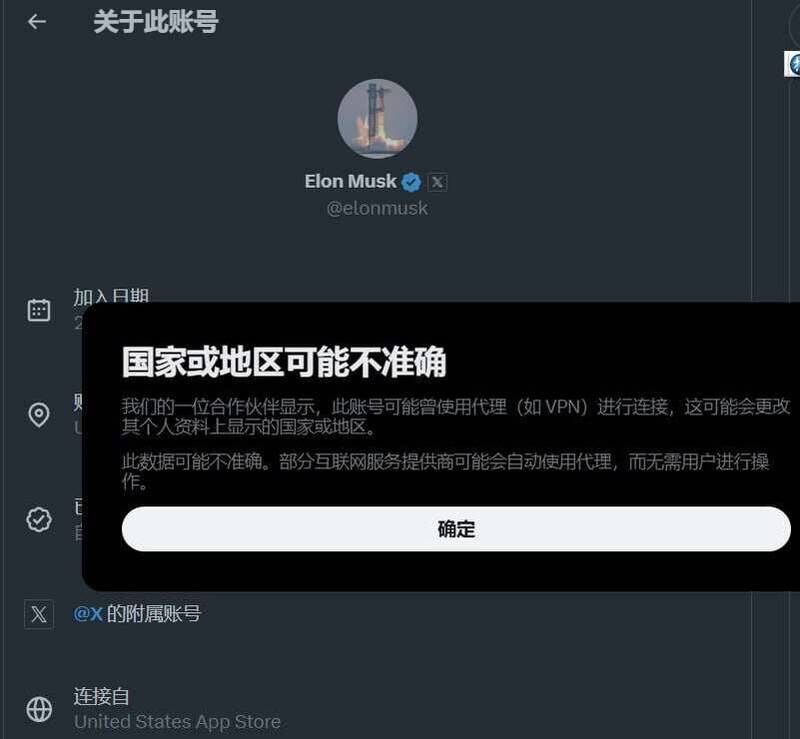
Image : After Musk arrived in Beijing with his delegation, a warning appeared on his social media platform X account's information page. (Image taken from the X platform)


No comments:
Post a Comment