Direct Translation
Trump is here to confront his opponents
Commentator : Wu Hongsen / Editor: Li Guangsong / Source: Facebook / https://www.aboluowang.com/2026/0513/2383187.html
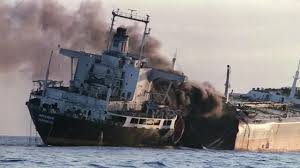
Placing Trump's visit to China within the grand strategic context of the "energy showdown over rare earths," you will find that Trump is there to confront China.
I. The real background is not trade, but an energy war.
Many people still cling to outdated thinking: believing the core of the U.S.-China rivalry is tariffs, chips, and trade surpluses but the U.S.-China rivalry in 2026 has entered the realm of energy control.
Because Trump has precisely identified China's true weakness: its 70% dependence on energy imports. China is the world's largest manufacturing nation, its industrial system so massive that it needs to "burn oil" daily to operate. But its energy lifeline is highly vulnerable: the Strait of Hormuz, the Strait of Malacca, and the Indian Ocean shipping routes are practically the lifelines of China's industrial civilization.
After the outbreak of the Iran-Iraq War in 2026, the Strait of Hormuz crisis will completely expose this fatal weakness. Chinese oil tankers will be shelled by the Revolutionary Guard, international oil prices will fluctuate wildly, marine insurance will skyrocket, and the risk of energy supply disruptions will increase dramatically. Trump has chosen to confront China at its most vulnerable moment.
II. Following the Iran-Iraq War, the US blockaded Iranian ports, effectively controlling the situation in the Hormuz region. Simultaneously, it deeply intervened in Venezuela's oil system, directly managing a portion of crude oil sales and revenue. Coupled with its global naval projection capabilities, the US has developed an unprecedented strategic capability: whoever secures stable energy, whoever must accept higher prices, and whoever will be restricted—the U.S. increasingly holds the power to decide. China, on the other hand, is the world's most energy-dependent manufacturing powerhouse.
The logic of the game has been completely reversed. Previously, China worried about the U.S. controlling its chip supply. Now, China must worry about the U.S. controlling its energy supply. A chip supply disruption causes industrial pain; an energy supply disruption leads to a direct depletion of national resources.
III. Trump's visit to China will clearly tell Beijing that the U.S. is no longer afraid of China's rare earth trump card.
This is because the U.S., Japan, and Australia are accelerating the reconstruction of their rare earth supply chains—expanding production in the U.S., commissioning heavy rare earth projects in Australia, and engaging in joint investment in Japan—a diversification process far exceeding China's expectations. The U.S. can withstand several years of cost increases but China may not be able to withstand the pressure of energy shortages.
The true core issues of this visit to China likely include: demanding that China immediately reduce or even stop purchasing Iranian oil;
demanding that China massively shift to purchasing U.S. crude oil and LNG (a multi-billion dollar order);
demanding that China realign itself on Middle Eastern issues and cooperate in stabilizing the situation in Hormuz;
making substantial concessions on key minerals, supply chains, and Taiwan.
Many people believe this is "negotiation." In reality, it is closer to an ultimatum. Because Trump's energy leverage is far more forceful, urgent, and irreplaceable than the tariffs used in past trade wars.
IV. China's biggest misjudgment is overestimating rare earths and underestimating energy.
In recent years, Chinese public opinion has been obsessed with the "rare earth trump card," believing that the U.S. cannot do without Chinese rare earths but the reality is harsh: rare earths can be replaced at high costs, and the West already has clear pathways; however, energy is difficult to replace in the short term, especially for an industrialized country like China. The U.S. can rebuild rare earth mines and invest in projects with allies; China cannot quickly break free from its dependence on Middle Eastern energy. Especially now, with the Chinese economy under pressure, the ongoing real estate crisis, and meagre manufacturing profits, the continued rise in energy costs will bring systemic pressure.
Trump's greatest strength lies in applying pressure by exploiting the opponent's most vulnerable points. He is a thoroughgoing transactional strategist.
V. Trump's visit is to confirm reality.
Because the entire international landscape has begun to tilt in America's favour: America's energy advantage continues to expand; the dollar and financial system remain stable; alliances like the US, Japan, Australia, and India are strengthening supply chains to mitigate risks; Western capital continues to flow out of China; and China's most critical energy weakness is increasingly exposed to the spotlight.
Trump's visit to China truly conveys only one message: the U.S. is ready to enter the next phase of the game. In the past, it was trade wars and technology wars. Now, an energy war has quietly begun. And the energy war is ten times more brutal than the former two—it directly determines whether an industrial civilization can function normally.
VI. What's truly frightening is time.
America's advantage is expanding over time: the rare earth substitution system is rapidly taking shape; energy export capacity and control continue to grow; and coordination among allies is becoming increasingly seamless. China, on the other hand, must consume massive amounts of energy every day to maintain its industrial machinery.
The longer this drags on, the greater the pressure on China will be. This is the real source of Trump's confidence during this visit to China.


No comments:
Post a Comment