Direct Translation
The Trump-Xi meeting ended without an agreement or a communiqué! Beijing only said nine words
Editor: Fang Xun / Source: United Daily News / https://www.aboluowang.com/2026/0517/2384587.html
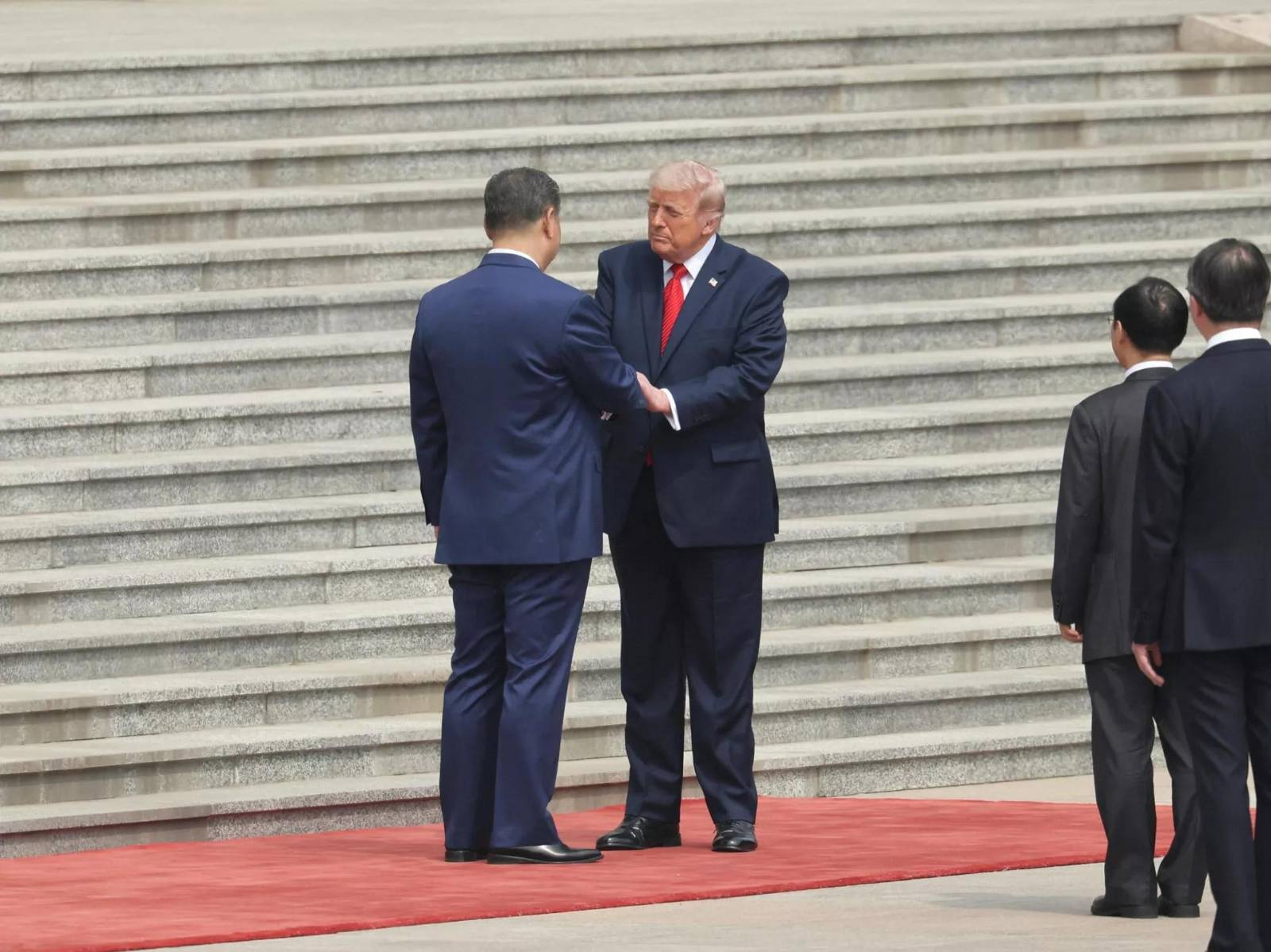
Trump's whirlwind trip to Beijing has concluded, with both the White House and the Chinese Foreign Ministry summarizing the itinerary. International media and the Chinese public are debating who won and who lost, with some saying it was a "win-win situation for both China and the US, each getting what they need," others saying "South Korea wins face, America wins substance," and still others saying China "won twice." Beyond these various opinions, think tank members in Beijing have privately summarized three key outcomes:
The two sides did not sign a trade agreement or issue a joint communiqué
Why are there so many interpretations? First, this Trump-Xi summit broke with convention in many ways. There was no signing of investment and trade agreements witnessed by Trump and Xi, no joint communiqué, and even the previously rumoured gift list changed. The simplest proof is that after Wang Yi summarized Trump's visit, an AI search for "major achievements of China during Trump's visit to Beijing" returned the answer: "Currently, there is no clear information showing that China achieved specific substantive results during Trump's visit to Beijing."
The three key outcomes summarized by Beijing think tank members can be described in three sets of nine characters: "soft landing, new framework, and major hardcore."
Without quoting the White House's celebratory pronouncements or mentioning Wang Yi's praise, and using more straightforward language, "soft landing" refers to the truce agreement, without a written document, that has emerged from the various conflicts between the U.S. and China since Trump's second term, such as the tariff war, the chip war, the rare earth war, the technology war, and the currency war. In other words, at the height of the tariff war, tariffs on Chinese goods reached 145%, but with China's exports surging by 11.9% in the first quarter of this year, the war could no longer continue, necessitating a truce.
Of course, there are differing opinions, arguing that some conflicts will cease while others may continue, such as the AI war. Some have also noted that Trump's delegation of business leaders included those selling chips, electric vehicles, and mobile phones, but none representing the field of artificial intelligence. The response is that this turning point signifies a halt to the various conflicts between the U.S. and China, ushering in a soft landing phase that could last for several months.
As for the "new framework," the outside world is already very familiar with it; it is the "constructive strategic and stable relationship between the US and China" that China has been heavily promoting. When handling international relations, the CCP's first step is to define the relationship. The US and China already had a "new type of great power relationship," and now a new definition is being proposed.
This definition, elevated to the highest level, is a strategic relationship. This time, the term "strategic relationship" is further defined by two qualifiers: constructive and stable. Beyond the official interpretation, this primarily means two things: first, a shift away from emphasizing the balance between competition and cooperation; and second, a focus on risk management.
While "strategic relationship" may seem like a cliché, interpreting it within a new framework reveals new meaning. In the official CCP language, it means defining a strategic relationship and providing strategic guidance. This new framework not only outlines the general direction of future US-China relations but also defines its general scope. If circumstances change slightly, China will assert that the two heads of state have already proposed strategic guidance, and actions must adhere to this guidance without deviation. This essentially creates a protective shield for U.S.-China relations.
Finally, let's look at the "big core." "Hardcore" is a term directly translated from English and is also a popular internet slang term. Originally referring to something extreme, powerful, or challenging, it now refers to problems with extremely high barriers to entry and immense difficulty. In the case of Trump's visit to Beijing and the Trump-Xi meeting, the Taiwan issue was the biggest "hardcore" problem.
Before the Trump-Xi meeting, unusually, Trump publicly stated that he would discuss the Taiwan issue and arms sales with Xi, while Beijing hinted that the Taiwan issue would not be discussed, arguing that traditionally, international leaders' summits do not substantively discuss Taiwan due to sovereignty restrictions. However, at the Trump-Xi meeting, the situation reversed. Xi proactively brought up the Taiwan issue, while Trump avoided a direct response, choosing to speak only aboard Air Force One.
Reports indicate that during the Xi-Trump meeting, Xi Jinping began by mentioning some setbacks in Sino-U.S. relations, then discussed his views on Sino-U.S. issues, stating the need to find a way to coexist. This naturally led to the proposal of a new strategic framework: a "constructive strategic and stable relationship between China and the U.S." This framework explains four aspects: "cooperation as the main focus, competition within limits, differences manageable, and peace achievable." The issue of peace then led to the Taiwan issue. Xi Jinping's official remarks at the summit, released by the Chinese Communist Party's official media in the form of a breaking news report, were unprecedented in both content and format. Trump's subsequent response upon returning to the U.S. may also foreshadow a significant turning point.


No comments:
Post a Comment