Direct translation
Major wave of protests erupts in China! Led by workers, unrest spreads across Guangdong, Henan, Shaanxi, Hebei, Shandong and beyond
Editor : Fang Xun / Source: Newtalk News / https://www.aboluowang.com/2026/1104/2453249.html / Image : On 21 October 2026 in Shantou, Guangdong, nine construction workers climbed to the roof of a residential building to demand payment of their long-overdue wages. Screenshot from "X" (@YesterdayBigcat)
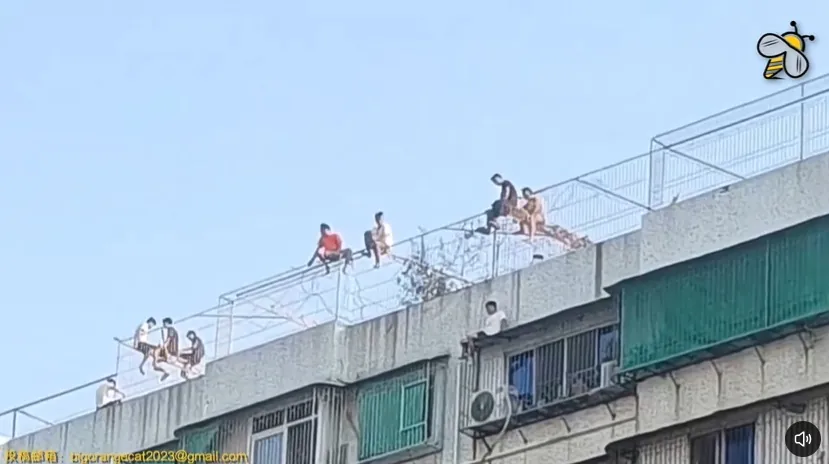
On 2 November 2026, the U.S.-based NGO "Freedom House" released the 13th edition of its "China Dissent Monitor" (CDM) report. It notes that 948 incidents of dissent and protest were recorded across China between July and September 2026 (the third quarter)—an increase from the previous quarter, yet a 33% decline compared to the same period in 2025. The report suggests that this year-on-year decrease may be linked to intensified censorship rather than reflecting the actual situation on the ground. According to the analysis, "worker-led" protests accounted for the largest share (44%), followed by protests by homeowners (27%) and rural residents (9%). Guangdong Province saw the highest number of protests this quarter, accounting for approximately 13% of the total, followed by Henan, Shaanxi, Hebei, and Shandong. Since June 2022, the CDM has documented a cumulative total of 16,845 incidents of dissent.
The report highlights the issue of land expropriation and forced relocation, noting that more than 1,100 such protests have occurred since June 2022. These involve rural and urban residents opposing land seizures, obstructing demolitions, or demanding compensation for resettlement. Such protests have surged significantly in recent years—increasing roughly fivefold between 2023 and 2025—and have spread across 31 regions, underscoring the persistent conflicts fueled by local governments' reliance on revenue from land sales. Meanwhile, the issue of unpaid wages remains prominent; construction sites account for 52.8% of all worker-led protests—a proportion far exceeding the construction sector's share of non-agricultural employment. Furthermore, the typical seasonal uptick in wage-related protests appears to have arrived early: in the third quarter, labour-related protests made up 45.2% of all offline incidents, up from 38.2% during the same period in 2025. The report notes that "threatening to jump from a building" is one of the more provocative tactics used in worker protests. While it accounted for only about 2.4% of such incidents in the third quarter, analysis indicates an upward trend in the use of this tactic at private construction sites over the past three years—a development that may reflect the deteriorating conditions within the private real estate and construction sector. State-owned construction enterprises have also become frequent targets of protests, with China State Construction Engineering Corporation (CSCEC) recording the highest number of such incidents this quarter. Meanwhile, protests in the manufacturing sector are particularly prominent in coastal provinces, including Zhejiang, Jiangsu, Guangdong and Fujian.
Data for "China Dissent Monitor" is gathered from sources such as news reports, civil society organizations, and social media platforms within China, with the collection process supported by machine learning. The report highlights that, despite intensifying censorship, the public continues to express grievances—concerning issues like land, wages, and relocation—through open, public action.
Ending 31 Years of Republican Rule in Texas! Far-Left Governor takes office—Plans cash handouts and halts AI data center development
Reporter : Wang Duruo / Editor: Li Hua / https://www.aboluowang.com/2026/1104/2453482.html Image Sourced from from X : Democrat Gina Hinojosa wins the Texas gubernatorial election.

A shift in Deep-Red Texas! Far-Left governor takes office, promises cash handouts and halts AI data center development
In a major upset during the U.S. midterm elections, the Republican stronghold of Texas has flipped. Democratic gubernatorial candidate Gina Hinojosa defeated incumbent Republican Governor Greg Abbott, ending the Republican Party’s 31-year hold on the Texas governorship, which had lasted since 1995. On the same day, fellow Democrat James Talarico also secured a seat in the U.S. Senate.
A labour attorney by trade, Hinojosa has served as a member of the Texas House of Representatives since 2016 and previously held the position of vice-chair of the Texas House Progressive Caucus. A staunch far-left figure, she will become the first Latina governor in Texas history. She is a vocal supporter of transgender rights and has long opposed the private school voucher policy—a school-choice initiative championed by Abbott.
During the campaign, she deliberately downplayed these ideological stances. According to an analysis by The Washington Post, she steered clear of cultural and ideological debates, focusing her efforts instead on issues like the cost of living, housing prices and public education—a strategy aimed at winning over centrist voters dissatisfied with the Republican Party.
Her policy platform leans heavily to the left: she has proposed a $1,500 "anti-corruption tax refund" for every Texas resident—essentially distributing state funds directly to voters—and has called for a moratorium on development permits for AI data centers, citing their high energy consumption and the need to first establish safeguards for residents. This comes as a significant blow to Texas, a state that has been actively courting major tech companies to set up operations there.
The broader political climate played a key role in the Democrats' victory. The conflict involving Iran has driven up oil prices, making the cost of living the primary concern for voters—a situation that has hit the incumbent Republican administration the hardest. Reuters also noted that the growth of the Latino population and the expansion of metropolitan areas are reshaping the political landscape in Texas.
Despite a clear advantage in campaign funds and advertising resources, Greg Abbott’s camp was defeated. Given that Texas had previously favored Donald Trump by a double-digit margin, this political shift serves as a wake-up call for the Republican Party. With a far-left governor now at the helm of the nation’s second-largest state—a state that holds the lifeblood of the energy and technology sectors—the direction Texas will take over the next four years bears close watching.
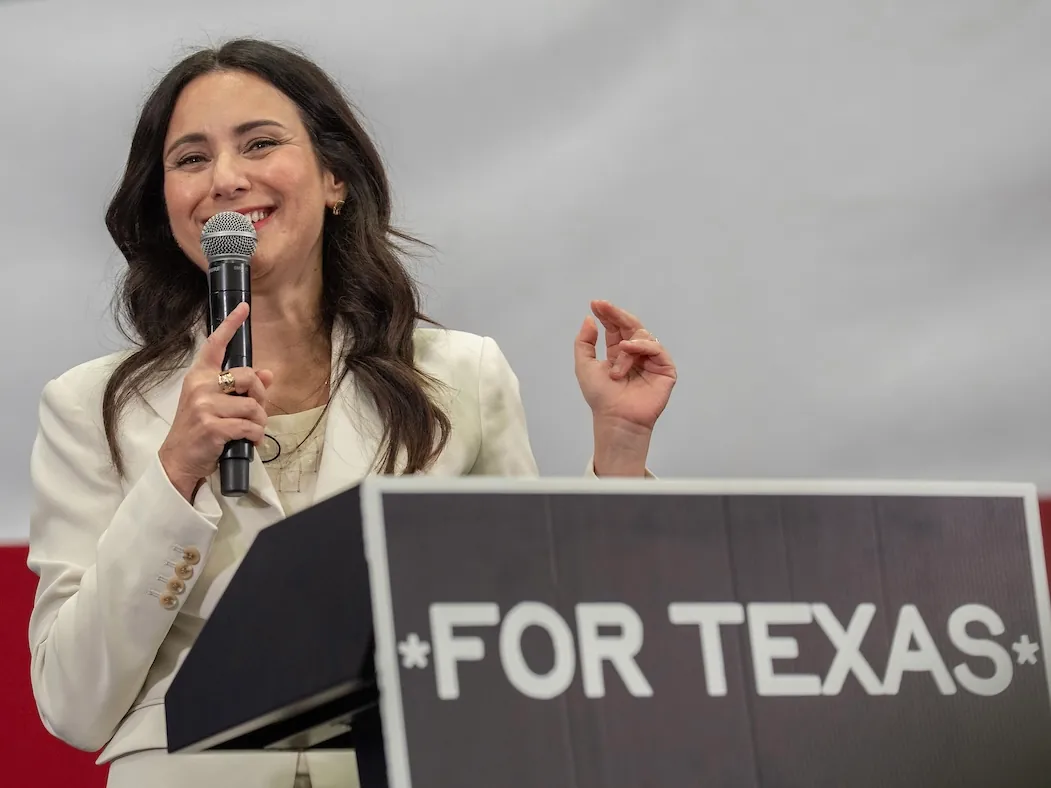
Image Sourced from X : Hinojosa, a native of Brownsville, Texas, is a former labour attorney who was elected to the Texas House of Representatives in 2016. She has long focused on issues such as public education, labour rights, and local governance.

Image Sourced from X (@drdave1999) : Democratic Governor-elect of Texas, Hinojosa (left), and U.S. Senator-elect, Talarico (right), both defeated their Republican opponents in the 2026 midterm elections, marking a significant breakthrough for the Democratic Party in Texas.
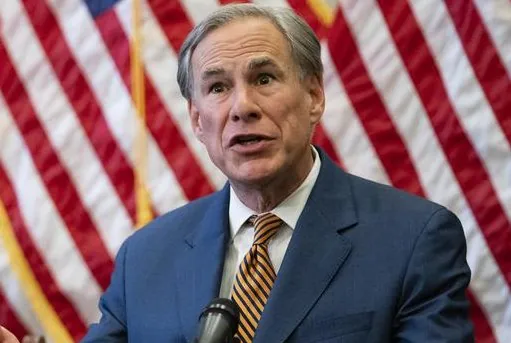
Image Sourced from X account @EricLDaugh : An analysis by *The Texas Tribune* suggests that the victory of the Democratic candidate—despite the significant advantage in campaign funds and advertising resources held by the Abbott camp—demonstrates that vast political resources cannot necessarily offset voter dissatisfaction with the incumbent party.
Aiding a Democratic landslide—A First in History! Oil prices hit record highs on Election Day; Ukrainian strikes on Russian refineries and the CCP’s halt in diesel exports add fuel to the fire
Gas prices hit record highs on Election Day: Ukraine bombs Russian refineries while the CCP adds fuel to the fire by cutting diesel supplies.
For the first time, American voters headed to the polls this year facing gasoline prices exceeding $4 per gallon. Citing data from GasBuddy, *Bloomberg* reported that as of 10:00 a.m. on November 3, the national average price for gasoline in the U.S. reached $4.13 per gallon—the highest level ever recorded for November 3. Patrick De Haan, head of petroleum analysis at GasBuddy, noted that this figure also surpasses any previous Election Day, exceeding even the levels seen in 2022, a year that saw historic highs for fuel prices. According to the American Automobile Association (AAA), while current prices have retreated slightly from the May peak of $4.56 per gallon, they remain significantly higher than those seen during the same period in previous years.
The situation is even more painful for those driving diesel-powered pickup trucks to the polls. As of 2 November 2026, the national average price for diesel stood at $6.27 per gallon—just 24 cents shy of the all-time high reached in September—marking another record for an Election Day. Diesel inventories are at their lowest seasonal level on record, just as the winter heating season begins.
The persistence of high fuel prices is driven in part by global transportation disruptions and refinery crises linked to the conflict in the Middle East; another major factor is the ongoing campaign by Ukraine. This year, Ukrainian forces have launched over 194 drone strikes against Russian oil refineries, hitting all 11 of Russia’s largest facilities. By June, Russia’s fuel production had fallen by 25% year-on-year, forcing Moscow to impose a ban on diesel exports. In September, Donald Trump publicly urged Ukrainian President Volodymyr Zelenskyy to cease attacks on Russian diesel infrastructure, arguing that such actions were harming the entire world.
Meanwhile, the Chinese Communist Party (CCP) is also tightening its grip on global supplies. Following the outbreak of conflict in the Middle East, Beijing began restricting exports of refined petroleum products in March. Although these restrictions were briefly eased in July, they were almost entirely reinstated in October—with exports of gasoline, diesel, and jet fuel effectively halted—just one week after Donald Trump had requested that Xi Jinping help stabilize global fuel supplies. U.S. Secretary of Energy Chris Wright has pointed out that diesel exports from the Middle East and the Chinese Communist Party (CCP) have disappeared from the global market.
When adjusted for inflation, current oil prices are actually lower than they were in 2022. According to an analysis by the Institute for Progress, oil prices during election weeks in 2010 and 2012—when calculated in 2024 dollars—exceeded $4 per gallon. Nevertheless, few people look at inflation-adjusted figures, and the $4 mark remains a significant psychological threshold.
High fuel prices have become a central issue for Democratic candidates seeking votes. Meanwhile, Donald Trump has repeatedly stated that once the wars end, oil prices will come down.
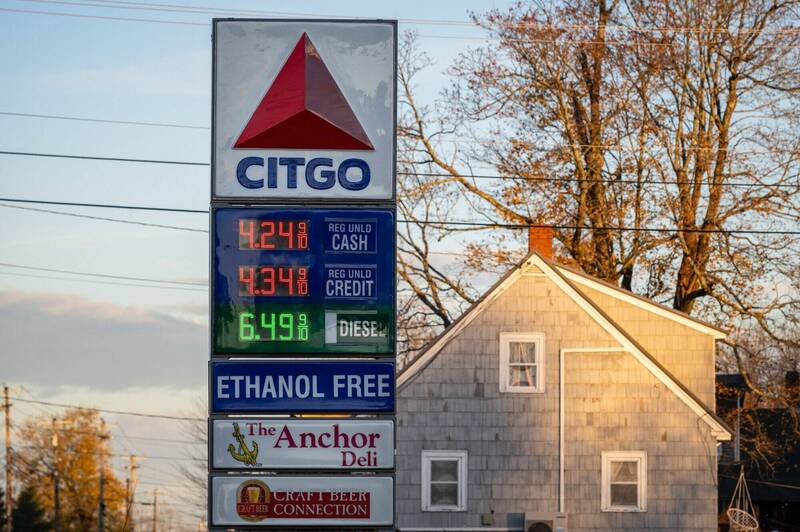
Image : U.S. gasoline prices surpassed the $4-per-gallon mark on Election Day (3 November 2026). (Bloomberg)
Shocking secrets of how Zhongnanhai operates! The Inner Sanctum can remove Top Leaders at a moment’s notice
— Cheng Xiaonong on the Inner Workings of the "Red Wall": High-Ranking Officials' Bodyguards Also Serve as Monitors
Editor: Fang Xun / Source: Radio Free Asia (RFA) / https://www.aboluowang.com/2026/1105/2453721.html / Image : The Red Wall, a new book by U.S.-based scholar Cheng Xiaonong, was recently published in Taiwan. The author gave an exclusive interview to Radio Free Asia on 3 November 2026. (Photo by reporter Li Zhide)

The Red Wall ("Hongse Gaoqiang"), a new book by U.S.-based scholar Cheng Xiaonong, was published in Taiwan on 27 October 2026. Cheng, who previously worked in the Research Office of the Standing Committee of the National People’s Congress (NPC) and at the Institute for the Reform of the Economic System—an organization established by Zhao Ziyang—spoke to Radio Free Asia (RFA). Drawing on his own experiences from within the system, he shed light on the internal operations of the Chinese Communist Party’s (CCP) top leadership, detailing the power dynamics embedded in secure communications, personal security details, and the specific venues where leaders conduct their activities.
Zhongnanhai, located in Beijing, is widely regarded as the ultimate symbol of power within the CCP. However, Cheng argues that to truly understand this system, one cannot merely look at official organizational structures or the titles held by various officials; one must also grasp the internal, unwritten rules that govern daily office operations, communications, and security arrangements.
In an interview with RFA at a hotel in Taipei this past Tuesday (3 November), Cheng remarked: "Only when you are inside the 'inner sanctum' do you encounter individuals directly involved in these 'unspoken rules,' allowing you to grasp their subtle nuances. What I am referring to is the secret surveillance of the CCP’s top-ranking officials—a mechanism that ensures the leadership can, at any moment, either remove these individuals—'take their heads,' so to speak—or promote them."
Insights from within the system: Unveiling the secrets behind the "Red Wall"
The Red Wall consists of ten chapters, organized into four sections: "The Core of Power," "Black-Box Mechanisms," "High-Level Power Struggles," and "Historical Cycles." The book uses five key locations—Zhongnanhai, the Great Hall of the People, Yuquanshan, the Diaoyutai State Guesthouse, and the Jingxi Hotel—as entry points to explore the surveillance of the elite, decision-making processes, and internal power struggles.
In chapters such as "Working Inside the 'Inner Sanctum'" and "Encounters in the General Office of the NPC Standing Committee," Cheng recounts his time working within the system. He recalls that during his tenure at the Research Office of the NPC Standing Committee, he worked alongside Deng Rong, the youngest daughter of Deng Xiaoping. Having earned her trust, he gained access to certain internal affairs. Through the tasks she assigned him and their day-to-day conversations, he came to realize that an individual’s public title does not necessarily reflect their true status or actual role.
The telephones in the office also served as a window through which he could gain insight into how this entire system functions. Cheng Xiaonong recounts that he once used the secure telephone line for high-ranking officials—known as the "red phone"—and later, through his work involving the budgets of central government departments, discovered that this communication system also functioned as a tool for internal surveillance.
Secure telephones as surveillance tools
"While intended to maintain confidentiality for the Chinese Communist Party (CCP)," Cheng explains, "the 'red phone' is actually a comprehensive surveillance system. The moment you lift the receiver, recording is triggered automatically; every single word spoken is captured. Personnel from the Confidential Communications Bureau—the unit responsible for monitoring—transcribe the entire conversation, word for word, and submit it as a report."
In addition to the "red phone," Cheng mentions office phone numbers beginning with the prefix "39." Once, while attending an economics seminar for young and middle-aged officials from central government agencies, he provided his office number on the registration form—a detail that caught the attention of other participants. He then realized that, among officials in central government bodies, a "39-series" number signifies that the user works within a core administrative zone.
Cheng recalls that while some attendees had heard of "39-series" numbers, they did not know which specific agencies utilized them. He notes that at the time, such numbers could not be found through standard directory assistance, though those who knew the number could dial in from the outside. Thus, a set of office phone numbers could serve as an identifier for both the user’s identity and their workplace.
Personal security details: Protection and surveillance
Moving from electronic surveillance to physical monitoring, the book’s chapter, "Who Is the CCP’s Chief Administrator?", explores the authority over high-level security details and its political implications. According to Cheng, the key to understanding this system lies in determining to whom the security personnel report. The fact that leaders spend their days in the constant company of their security detail does not mean they have the power to command or direct that force themselves. However,
Cheng Xiaonong states: "Every member of the Politburo is assigned a personal security detail. While these guards are tasked with protecting the official, they are also tasked with the potential duty of detaining them. This is a phenomenon unique to China—it exists nowhere else in the world. The decision does not come from the guards themselves, but from their superiors; as military personnel, the guards are bound to obey orders unconditionally. It is the director of the Security Bureau who issues direct orders to these guards."
He points out that, in the course of their duties, these guards also act as monitors, reporting the daily activities of the officials they protect—including where they go and whom they meet—to higher authorities.
In an interview lasting over an hour, he also refutes claims that different security units might "serve different masters" and engage in armed conflict with one another: "People often talk about the Military Commission’s Security Bureau clashing with the Central Security Bureau, but in reality, they are part of the same force; there is no such thing as two separate, competing units." According to his explanation, the force operates under a unified command structure, with guards answering to the director of the Security Bureau rather than owing personal allegiance to the specific leaders they are assigned to protect.
Decision-making is not confined to Zhongnanhai.
Regarding the locations where decisions are made, Cheng draws on his own experience—having entered five such sites—to explain their distinct functions, ranging from office work and residential use to hosting foreign dignitaries and holding meetings. "Most people assume that Zhongnanhai is the sole center for decision-making within the CCP, but in fact, it is primarily a place for administrative work," he says. He notes that leaders often handle official business from their private residences; thus, the actual site where a decision is reached may not necessarily be one of the formal, well-known office locations.
In Cheng’s view, observing where leaders conduct their work, as well as who controls their communications and security details, offers vital insight into how power functions at the highest levels of the CCP.
He argues that communication records, activity reports, and classified files collectively serve as a mechanism to keep high-ranking officials in check. Even those who reach the level of the Politburo or its Standing Committee cannot escape this system of surveillance. "Everyone must live in a state of constant trepidation," he says, "because you are under surveillance twenty-four hours a day."
The book also extends its discussion to historical events involving the CCP’s top leadership. Chapters such as "Power Struggles Within the CCP After June 4th" and "The 'Southern Tour' and the Coup Attempt" analyze shifts in power at the highest levels, while "The 'Cyclical Law' of CCP Autocracy" examines the dilemmas surrounding succession and the consolidation of personal, absolute power. The final chapter, "What Breeds Defiance?", reflects on Cheng Xiaonong’s personal experiences and the evolution of his thinking.


No comments:
Post a Comment