Direct translation
(Banned Article) Nepal has truly impressed everyone this time
Editor : Li Guangsong / Source: Descartes' Reflections / https://www.aboluowang.com/2026/0903/2428711.html
As a backpacking enthusiast, I had heard for years that Nepal was a mecca for trekkers worldwide, and I had always dreamed of hiking the classic ABC and EBC routes. However, lack of funds prevented me from doing so, and I never expected such a devastating mudslide disaster to occur.
However, this mudslide disaster has made me take a fresh look at this small, impoverished country with a land area of only 147,200 square kilometers and a population of approximately 29.6 million. While Nepal's disaster warning system was poor, the local government's performance in post-disaster relief was truly commendable.
The first thing that struck me was how quickly the Nepalese government, with most roads destroyed, deployed over ten helicopters for rescue operations—both military and civilian—after the disaster. On the day of the mudslide, numerous Nepalese rescue workers were already visible at many disaster sites throughout Nepal. Their rapid response confirmed what a friend I met on a trek last year had said.
Last July, shortly after leaving my job, I backpacked through the southern Tianshan Mountains in Xinjiang, traversing the northern route. On the last day of our trek down the mountain, we met a Hong Kong couple who were also backpacking along the northern route of the Southern Tianshan Mountains. We shared a ride back to Yili. On the way, the man told me about his trekking experience in Nepal.
He said that when he reached the top of the mountain, he felt unwell and suspected altitude sickness. He immediately called for help, and a helicopter arrived very quickly. More importantly, he didn't have to pay for it himself, as he had purchased insurance beforehand; the helicopter and hospitalization costs were covered by the insurance company.
Besides the rapid helicopter response, Nepal was also remarkably efficient in disclosing rescue information.
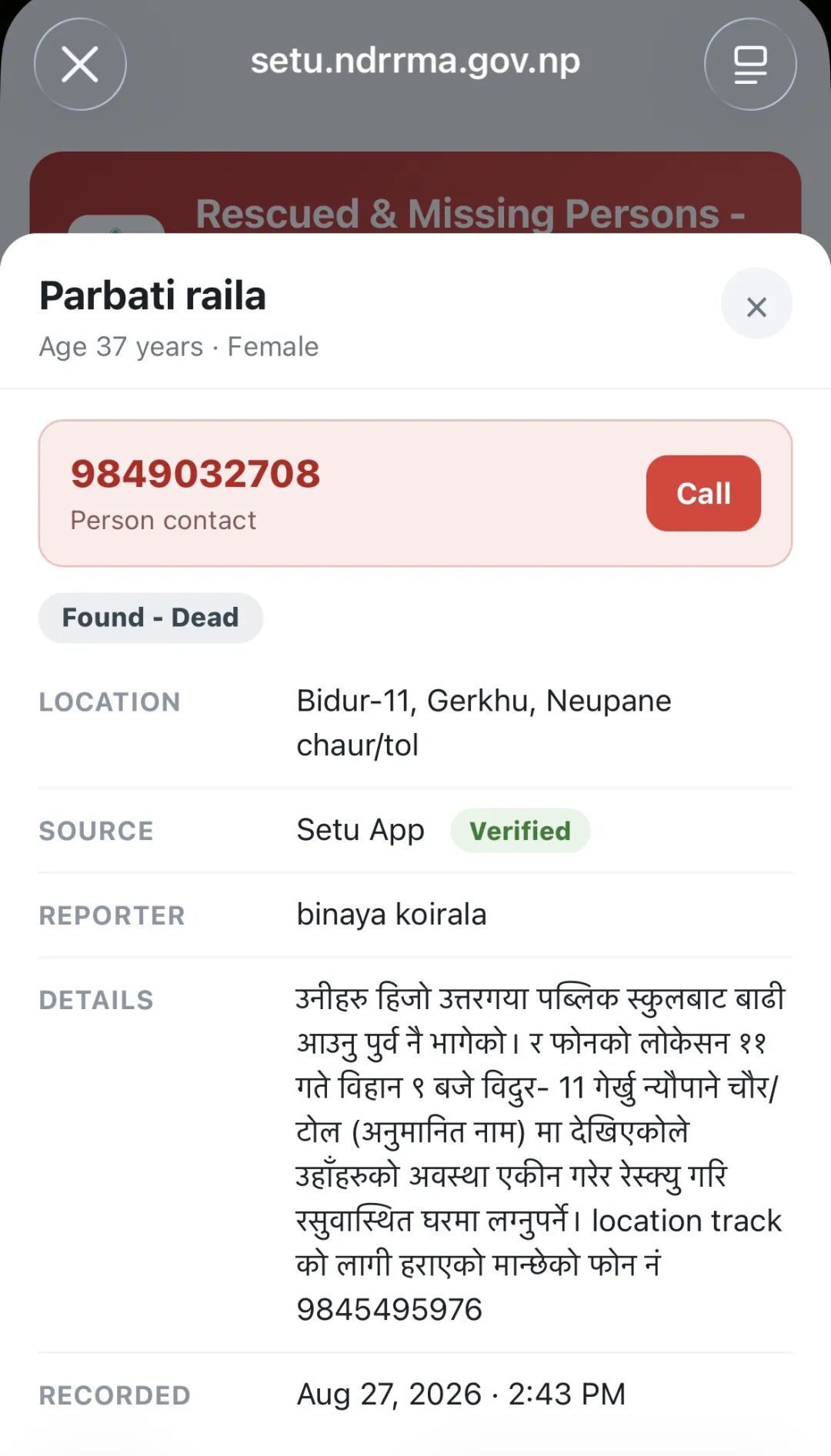
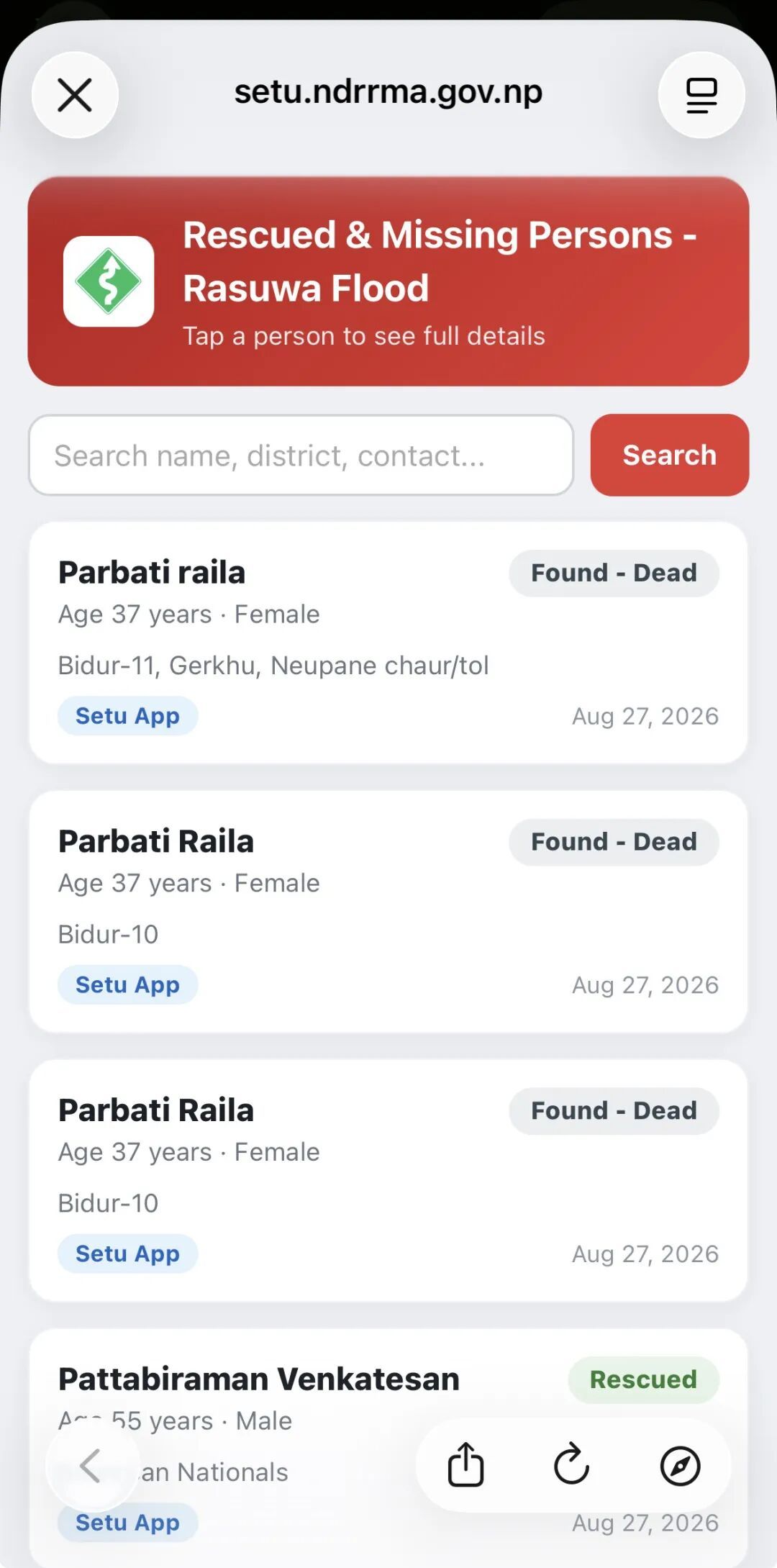
Nepal's National Disaster Risk Reduction and Management Authority (NDRA) has established a public "Missing and Rescued Persons List," which includes each person's name, age, gender, location, whether they were rescued, which hospital they were taken to, whether they were a foreigner, etc. The list is constantly updated daily with the number of dead and rescued, and everyone in the world can access the information.
Furthermore, Nepal also demonstrated highly professional rescue capabilities in the recent hydroelectric tunnel rescue operation.
In this mudslide disaster, many hydroelectric power stations were located in the valley. Floodwaters and mudslides directly flooded the tunnels, trapping numerous workers inside. The rescue operation was extremely difficult due to the risks posed by mud, boulders, floodwater, lack of oxygen, secondary collapses, and rising river levels.
However, the Nepalese government did not give up. Instead, it continuously organized excavation, search and rescue, drainage, ventilation, and tunnel entry efforts. A truly remarkable scene unfolded: Nepalese Everest climbers and mountain guides participated in the tunnel rescue.
These individuals, skilled in rope securing, cliff rappelling, and high-altitude rescue, found their expertise invaluable in this mudslide disaster. Using their experience and skills, they entered the mud-blocked hydroelectric power station tunnels, advancing approximately 120 meters before being unable to continue due to the mud and loose rocks. This demonstrates a very special social capability in Nepal: rapidly transforming mountain rescue capabilities into mudslide disaster relief capabilities.
So, why was Nepal able to perform so efficiently in this mudslide disaster?
I suspect it is because Nepal has long been a tourist destination, especially a mecca for global hiking enthusiasts. Over the years, it has established a complete and rapid rescue system, capable of quickly deploying helicopters and efficiently disseminating rescue information. Furthermore, the constant presence of mountaineers there has resulted in a large pool of experienced rescue personnel.
Finally, I truly believe that despite being a small country, Nepal offers many valuable lessons for us in high-altitude disaster relief.


No comments:
Post a Comment