Direct Translations
Before the lockdown in Hormuz is lifted, the UAE suddenly announces good news!
—The UAE's new oil pipeline bypassing the Strait of Hormuz is about 50% complete and is expected to be operational in 2027
Reporter : Wang Duruo / Editor: Zhong Kang / https://www.aboluowang.com/2026/0521/2386255.html / Image : Iran has demanded a complete ceasefire from the United States and guarantees of navigation safety in the Strait of Hormuz in response to ceasefire conditions. (Image: Screenshot from X account @BreakingAlert_)
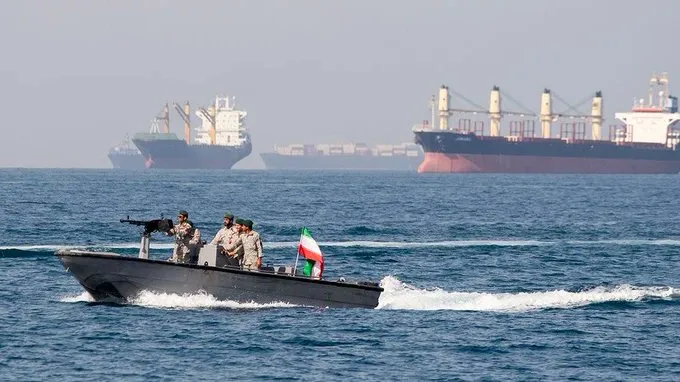
The United Arab Emirates is accelerating its efforts to reduce its dependence on the Strait of Hormuz.
On 20 May 2026, Sultan Al Jaber, CEO of the UAE's state-owned oil giant Abu Dhabi National Oil Company (ADNOC), announced that the UAE's second crude oil pipeline bypassing the Strait of Hormuz is approximately 50% complete and aims to be operational by 2027.
This new pipeline will directly double the UAE's capacity to export crude oil through the port of Fujairah in the Gulf of Oman, significantly reducing its dependence on the Strait of Hormuz.
Behind this move lies a massive crisis following the comprehensive deterioration of the situation in the Middle East.
Since the U.S.-Israel attacks on Iran in late February, Iran has virtually blocked the Strait of Hormuz, making it almost impossible for ships other than its own to pass normally. The global energy market has instantly descended into chaos, with oil prices, inflation, and the risk of economic recession all soaring.
Jaber bluntly stated that too much of the world's energy supply is currently tied up in a few "choke points." Every additional week the Strait of Hormuz is closed, the world loses nearly 100 million barrels of crude oil supply.
He warned, "If the world accepts that one country can control the world's most important sea lanes, then freedom of navigation is completely over."
More sensitively, the UAE has not only accelerated the construction of oil pipelines around the strait, but also officially withdrew from the Saudi-led OPEC organization on 1 May 2026, freeing itself from oil production restrictions. It is widely believed that this represents the Gulf states beginning to prepare for the "post-Hormuz era."
U.S. Energy Secretary Wright also publicly stated that as Persian Gulf countries accelerate the construction of alternative routes, the future importance of the Strait of Hormuz will gradually decline.
Analysis points out that behind this change lies a dramatic restructuring of the global energy landscape.
For decades, the Strait of Hormuz has been one of the world's most critical energy lifelines. But now, Middle Eastern countries have begun to realize that if energy exports are chronically "held hostage" by Iran, the entire global economy will be at great risk.
Meanwhile, the UAE has recently been attacked by thousands of missiles and drones, damaging numerous targets, including ADNOC energy facilities, some of which will take months to repair.
Jaber admitted that even if the conflict ended immediately and global energy transport returned to normal, it would likely not be until 2027.
He also specifically warned that the future explosion of the AI industry will cause global energy demand to far exceed market expectations, and the world is currently severely underestimating this energy pressure storm.
Trump threatens: "If you don't sign, we'll keep bombing!" Iran responds strongly.
Report by : Li Jianwei / Editor : Zhong Kang / Source : Newtalk / https://www.aboluowang.com/2026/0521/2386250.html / Image : The United States has unusually shown greater flexibility on sanctions, even offering economic incentives such as allowing oil sales and unfreezing overseas assets in hopes of gaining concessions from Iran on the nuclear issue. (Image: Retrieved from Baidu)
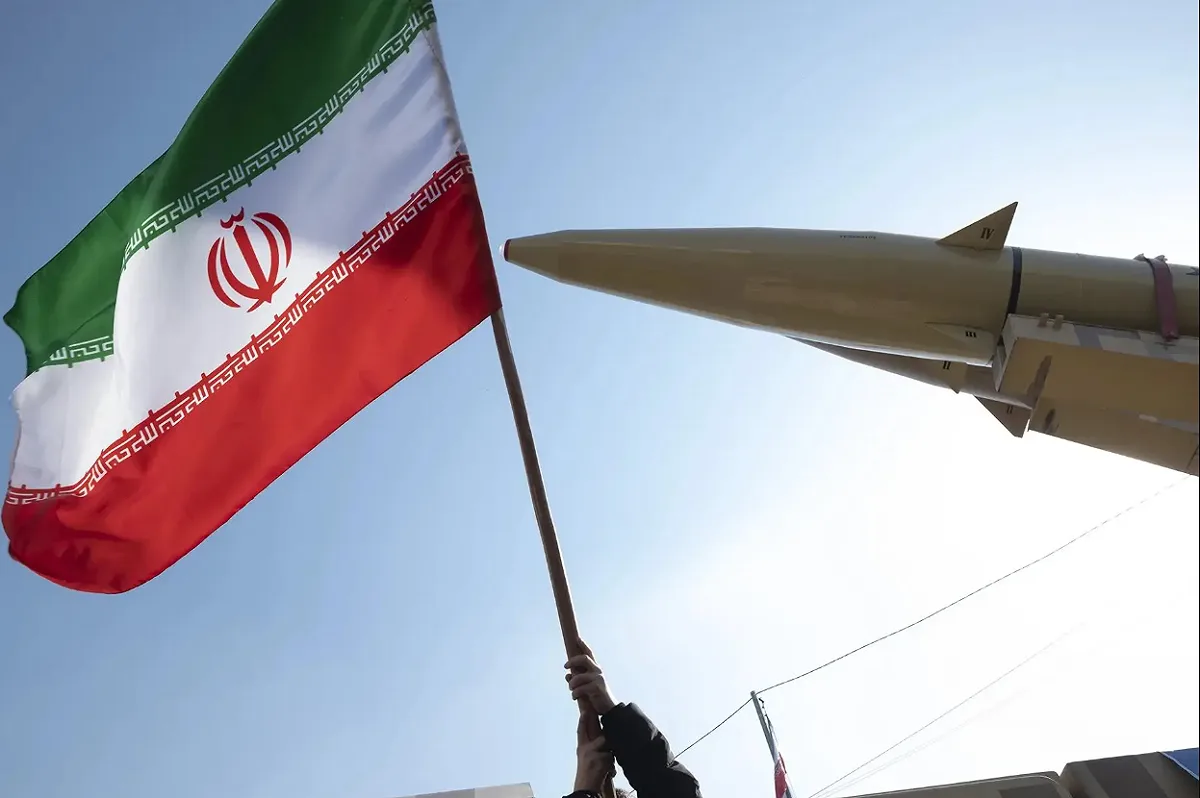
Tensions between the United States and Iran have taken a new turn. According to Turkey's Anadolu Agency and sources within the Pakistani government, the US has formally submitted a new counter-proposal drafted by Washington to Tehran as an official response to Iran's previous "14-point ceasefire proposal." The report indicates that the US has unusually shown greater flexibility on sanctions, even offering economic incentives such as allowing oil sales and unfreezing overseas assets in hopes of gaining concessions from Iran on the nuclear issue.
The report also states that Pakistani Interior Minister Mohsin Naqvi has urgently arrived in Tehran and delivered the U.S. documents to high-ranking Iranian officials, including the Commander-in-Chief of the Islamic Revolutionary Guard Corps, Ahmad Vahidi. Iranian Foreign Ministry spokesman Esmaeil Baghaei also confirmed on state television that Tehran is currently urgently reviewing the new proposal.
It is understood that the U.S. has made two key concessions. First, the U.S. is willing to provide "better incentives" for Iran's frozen overseas assets, which is interpreted by outside observers as potentially unlocking more than the previously reported 25%. Second, the U.S. Treasury Department's Office of Foreign Assets Control (OFAC) is also willing to grant temporary sanctions waivers for Iranian oil exports during formal negotiations, meaning Iran can resume some oil exports and international trade before the final agreement is signed.
However, the two sides remain seriously opposed on core issues. Iran's original "14-point plan" advocated a "ceasefire first, nuclear talks later," demanding a permanent ceasefire before initiating nuclear negotiations within 30 days; but the new U.S. proposal rejects simply postponing the nuclear issue, demanding that the ceasefire agreement simultaneously address sensitive issues such as highly enriched uranium, the dismantling of nuclear facilities, and restrictions on nuclear enrichment.
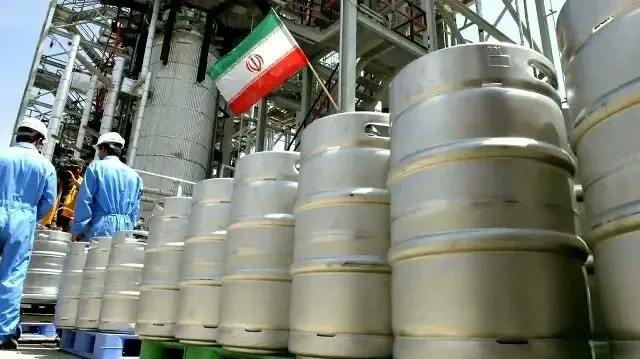
Iran's original "14-point plan" advocated a "ceasefire first, nuclear talks later," demanding a permanent ceasefire before initiating nuclear negotiations within 30 days. However, the new U.S. proposal rejects a mere postponement of the nuclear issue, requiring the ceasefire agreement to simultaneously address sensitive topics such as highly enriched uranium, the dismantling of nuclear facilities, and restrictions on nuclear enrichment. (Image : Screenshot from @nexta_tv X account)
Furthermore, Iran demands the establishment of a third-party-led monitoring mechanism in the Strait of Hormuz and requires the US military to cease its interception and blockade of Iranian vessels. The U.S. has indicated its willingness to discuss third-party monitoring, but details require further review. Regarding the maritime blockade, the US demands that Iran first cease drone attacks on U.S. bases in the Gulf and fully restore freedom of navigation in the Strait of Hormuz before providing security guarantees.
Iranian President Mafizeskian's latest remarks also sent a subtle signal. He stated, "In the current situation, empty slogans are useless; we must conduct dignified negotiations through concrete actions." He emphasized that Iran has the ability to defend its rights but is also willing to advance negotiations through rational dialogue.
On the other hand, U.S. President Trump has also publicly revealed his negotiation strategy with Iran. He stated, "If waiting a few more days can prevent war and avoid loss of life, I think that's a fantastic thing." However, he then issued a strong warning, "Now it depends on whether Iran is willing to sign or wants to continue being bombed."
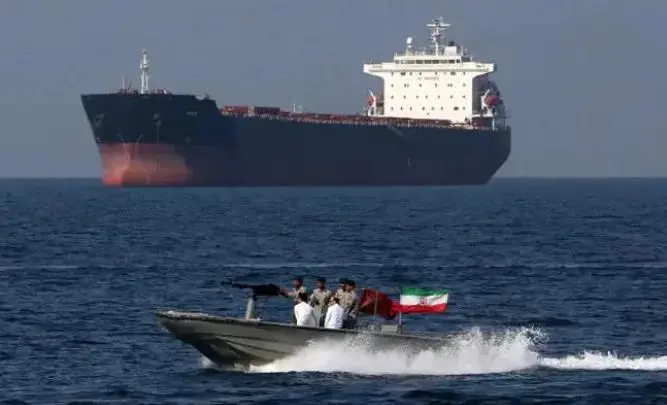
Furthermore, Iran demanded the establishment of a third-party-led monitoring mechanism in the Strait of Hormuz and requested that the U.S. military cease its interception and blockade of Iranian vessels.
(Image: Retrieved from Phoenix News, file photo)
Meanwhile, high-ranking Pakistani military officials were reportedly seen carrying documents related to the US-Iran agreement to Tehran, indicating that Islamabad is actively playing a mediating role.
Iran, on the other hand, continues to maintain a tough stance. The Iranian president emphasized, "Wanting Iran to surrender is pure wishful thinking." Iranian Foreign Minister Araqchi even claimed that the Iranian armed forces have become "the first force in the world to shoot down an F-35," and warned that if war resumes, "Iran will bring even more surprises."
Currently, Tehran has entered a closed-door deliberation phase, with Pakistani mediators awaiting Iran's final response.
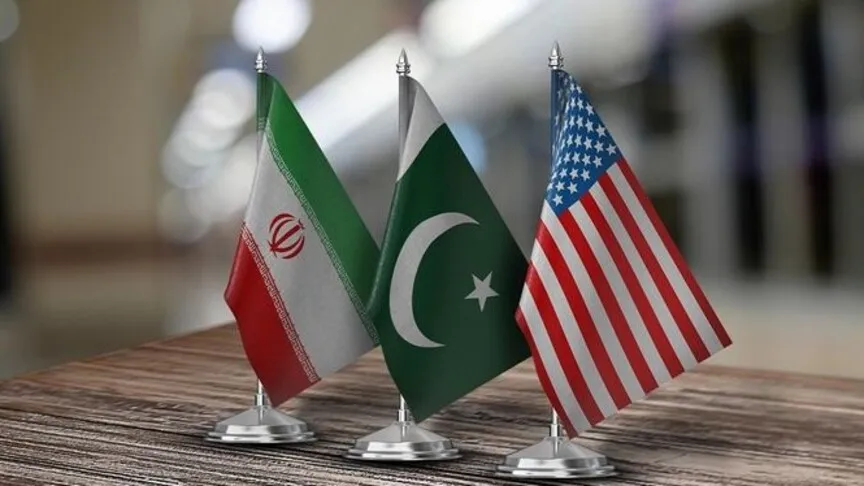
High-ranking Pakistani military officials were reportedly seen carrying documents related to the U.S.-Iran agreement to Tehran, indicating that Islamabad is actively playing a mediating role. (Image: Retrieved from X account @rainbow78521)
Trump pressures Netanyahu? Key Inside Story of the Iran War
—To Fight or to Negotiate? Trump: Netanyahu, Listen to Me
Editor : Zhong Kang / Source: RFI / https://www.aboluowang.com/2026/0521/2386196.html / Image : Web Screenshot
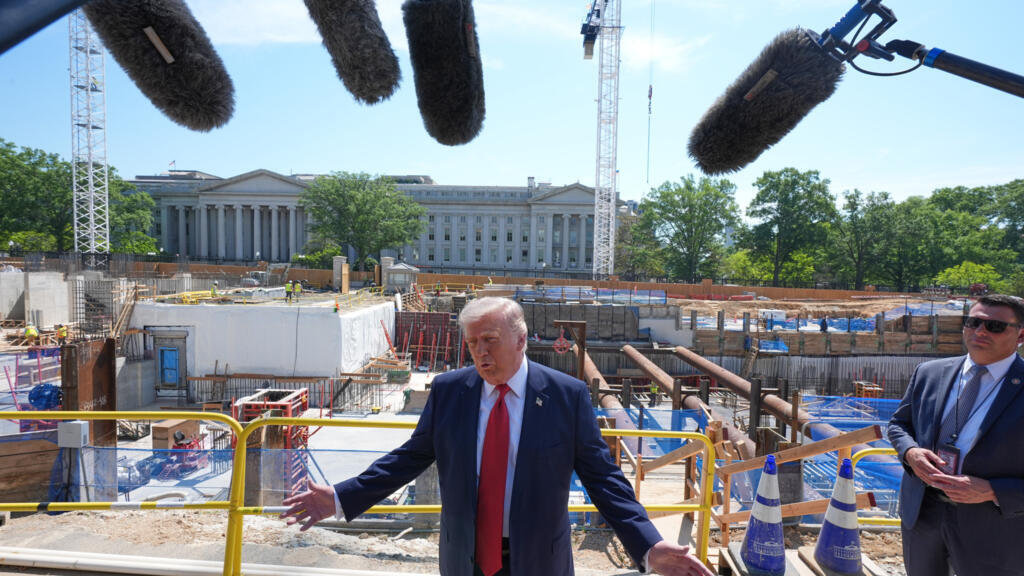
U.S. President Donald Trump said on Wednesday that negotiations between the U.S. and Iran on the nuclear issue have entered the "final stage," but if Iran refuses to reach an agreement, the U.S. will not rule out further military action against Iran, and may even launch a larger-scale attack. He emphasized that the U.S. "will not allow Iran to have nuclear weapons."
Speaking at the US Coast Guard Academy in Connecticut on May 20, Trump said, "We'll see what happens. We hit them hard. We might have to hit them harder, or we might not."
He stated that Iran's military capabilities have been significantly weakened, "Their navy is gone, their air force is gone, almost everything is gone." Trump said, "The only question is, do we go back and finish this? Or will they sign the papers? Let's see what happens."
Earlier, before boarding Air Force One, Trump also told the media that US-Iran negotiations have entered the final stage, but if the negotiations break down, the US will take "something ugly."
He said, "We're either going to make a deal, or we're going to do something a little ugly, but hopefully it won't come to that."
Trump also indicated that he is "not in a hurry" to reach an agreement.
He said, "Everyone's saying, 'The midterm elections are coming up, you're in a hurry.' But I'm not in a hurry. Ideally, I'd like fewer people to die, not more. We can do it in two ways, but I want fewer deaths."
Trump also commented on Israeli Prime Minister Benjamin Netanyahu, saying that Netanyahu "will do what I want" on the Iran issue.
When asked by a reporter if he had asked Netanyahu to postpone military action against Iran, Trump replied, "He's fine with it. He'll do whatever I want him to do."
However, multiple sources revealed that the recent phone call between Trump and Netanyahu regarding Iran was tense, with disagreements on whether to resume military action.
Trump and Netanyahu reportedly had a "long and difficult" phone conversation on Tuesday evening. The Wall Street Journal, citing sources, reported that Israel remains highly skeptical of any potential nuclear agreement with Iran, fearing that Iran will not truly abandon its nuclear program and will not cease its threats to regional countries. In two recent phone calls with Trump, Netanyahu reiterated his concerns regarding the issue.
Sources indicate that Trump prefers a diplomatic solution. He told Netanyahu that the US will continue to push for an agreement to prevent Iran from acquiring nuclear weapons, while warning that if Iran lacks flexibility in negotiations, it could face a new round of attacks.
During the calls, Trump mentioned that mediators such as Qatar and Pakistan are pushing for a "letter of intent" to be signed by the US and Iran, hoping to formally end the conflict and begin 30 days of follow-up negotiations.
Two Israeli sources indicated that there are significant differences between the two sides regarding the direction of the negotiations. Axios reported that a source described Netanyahu as "very anxious" after the calls.
According to sources, Qatar, Pakistan, Saudi Arabia, Turkiye and Egypt have been continuously mediating to narrow the gap between the US and Iran's positions. Qatar sent a delegation to Tehran earlier this week to discuss a new proposal with Iranian officials.
The Iranian Foreign Ministry stated on Wednesday that negotiations are still ongoing, and that all discussions are based on Iran's proposed "14-point plan." Iran has demanded that the United States lift the freeze on its funds, cease its "piracy" against Iranian vessels, and that Israel halt its military operations in Lebanon.
Despite frequent diplomatic efforts, several diplomatic sources have pointed out that the US and Iran still lack any signs of substantial compromise on issues such as their nuclear programs, the lifting of sanctions, and the reopening of the Strait of Hormuz.
Some analysts believe that a symbolic "memorandum of understanding" is more likely to be reached in the short term, leaving the more thorny issues to be addressed in subsequent negotiations.
The situation in the Middle East continues to impact global energy markets. International oil prices fell sharply after Trump signaled on Wednesday that negotiations were nearing completion.
London Brent crude futures fell $6.64, or nearly 6%, to $104.64 per barrel; US West Texas Intermediate (WTI) crude futures fell $6.49 to $97.66 per barrel.
The market had initially worried that the Iranian conflict could impact Middle Eastern oil supplies, but Trump's hints of a possible successful negotiation have raised expectations for a de-escalation of the situation.
Yahoo Finance reports that John Kilduff, a partner at Again Capital, stated, "People are taking these statements with a grain of salt, but the market is still quickly reflecting expectations of a possible easing of tensions."


No comments:
Post a Comment