Direct translation
Did pneumonic plague spill over from Russia? Two deaths reported in Shanghai and Chongqing; P4 Lab insider reveals details
Reporter : Wang Duruo / Editor: Zhongkang / https://www.aboluowang.com/2026/1011/2444380.html


While the controversy surrounding suspected pneumonic plague cases from Russia has yet to subside, a user submission went viral on X (formerly Twitter) on 10 October 2026. The submitter, who contacted the account "Luo Xiang Po Mu Tui Qiang" (Luo Xiang Breaks the Curtain and Walls), claimed to be a staff member at a P4 laboratory. He stated, "From what I understand, plague patients have appeared in Shanghai and Chongqing. We are panicked; it feels completely bizarre."
He explained that both individuals were diagnosed with the infection upon entering Russia; they were released only after undergoing isolation and treatment and achieving stable health. However, after flying to their respective destinations, they suddenly fell ill and died on the fifth day after arrival. "This is a situation we have never seen before; the circumstances are extremely grave." Domestic authorities requested more raw data from the Russian side but were refused.
In his view, this should not have happened. Plague researchers are required to be vaccinated and possess antibodies; should they fall ill, they receive immediate treatment. Yet, despite the pre-existing antibodies and timely medical intervention—two lines of defense—neither individual could be saved. "There is only one possibility: the strain has been upgraded."
He worries that this pathogen has a prolonged incubation period and the ability to remain undetected. Once it spreads in densely populated metropolises, contact tracing remains effective for only about three days; after seven or ten days, it becomes largely futile. A single person traveling for business, taking flights, and attending meetings could trigger a transmission chain affecting thousands. He asserts that such an agent "certainly did not occur naturally; it resulted from a lab losing control while upgrading the strain—it was definitely intended for military use, but the situation spiraled out of control." At the end of the post, he mentioned Feng Xiaolin and Wang Bing, doctors who died in the line of duty during the COVID-19 pandemic, noting that neither has received compensation and their families have been silenced. He added that in the current medical community, "if this [outbreak] arrives, there isn't a single person who wouldn't run."
Aboluowang commentator Wang Duran noted that the submission refers to the plague as a "virus," whereas the plague is actually a bacterial infection. However, the most critical question raised by the leaked information is not without foundation: plague is normally treatable with standard antibiotics; if even timely treatment fails to save the patient, could it be due to a genetically modified, drug-resistant strain?
There is precedent for such concerns. After defecting to the U.S., Ken Alibek—the number two figure in the Soviet biological weapons program—revealed that the Soviet Union had artificially cultivated antibiotic-resistant plague strains and researched "chimeras" created by combining multiple pathogens; the Irkutsk Anti-Plague Institute was involved in this work. Marshall Billingslea, former U.S. Special Presidential Envoy for Arms Control, stated that this incident "might not just be plague; it could be something far more terrifying." Former CDC Director Robert Redfield also publicly questioned the situation: when a laboratory accident occurs, antibiotics are typically administered immediately; if treatment fails, one possibility is that the pathogen has been modified and is unresponsive to antibiotics.
If it is indeed a modified strain, Russia’s adamant refusal to hand over raw data comes as no surprise. Once the genetic sequencing is made public, international scientists would likely spot signs of artificial modification at a glance—irrefutable evidence of a violation of the Biological Weapons Convention.
This modus operandi is all too familiar to the Chinese people. During the Wuhan outbreak, the CCP delayed releasing the virus's genetic sequence, blocked WHO experts from accessing raw data and early case records, and in 2021 flatly rejected the WHO's second phase of origin-tracing investigations; the Wuhan Institute of Virology's database remains offline to this day. When an authoritarian regime faces a crisis, its first instinct is always a cover-up; Moscow and Beijing are reading from the same playbook.
Bizarre pneumonic plague case in Russia! WHO admits: Cause of death a mystery, mass quarantine implemented
—Researcher at Russian plague-research lab dies of mysterious pneumonia; WHO admits cause of death is a mystery, ~200 people quarantined
Editor: Fang Xun | Source: Newtalk / https://www.aboluowang.com/2026/1012/2444543.html

The recent death of a staff member at a plague research institute in Siberia, Russia, has sparked international concern regarding laboratory safety and the risks of infectious diseases. Image: Via X @NeroArmore91252
A research center dedicated to plague prevention in Siberia, Russia, recently reported the death of a laboratory researcher due to pneumonia of unknown origin, drawing the attention of the international public health community. The World Health Organization (WHO) stated on Saturday (the 10th) that while the specific pathogen infecting the researcher remains unconfirmed, Russian testing has not detected any cases of plague, nor is there evidence of ongoing transmission of the disease. Following the incident, Russian authorities placed approximately 200 people under emergency quarantine, while the event also triggered public panic on social media regarding unknown infectious diseases.
According to Reuters, the deceased was Darya Shipilova, a 28-year-old female researcher at the Irkutsk Anti-Plague Research Institute in Russia. The WHO noted that she was hospitalized with severe pneumonia on September 29 and passed away on October 2; the exact route of infection and the cause of the illness remain undetermined.
The WHO stated that, based on data provided by Russian health regulators, the deceased and her close contacts were tested for various high-risk pathogens, with none of the screened high-threat pathogens detected. Russian authorities also reported that, as of October 9, the relevant contacts had completed their medical observation period without developing symptoms, and no other cases of severe pneumonia linked to this incident had been identified locally.
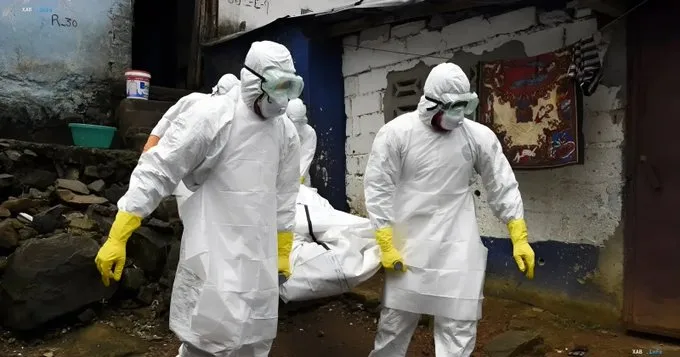
A suspected case of pneumonic plague recently reported in Siberia, Russia, has raised international concern. Image: Via X account @AlphaFoxCharlie
In its latest statement, the WHO noted that, based on current information provided by Russia, there is no evidence of ongoing transmission associated with the incident. However, a major uncertainty remains due to the lack of a definitive diagnosis for the deceased; consequently, the WHO cannot independently confirm whether the duration of monitoring for contacts was sufficient to rule out all possible causes of the illness. Since the global outbreak of COVID-19, international health officials have remained highly vigilant regarding cases of fatal pneumonia with unknown causes. Although identifying the exact cause of a single pneumonia case can sometimes be difficult, this incident has drawn particular attention because the deceased worked at a research institute specializing in plague and other high-risk infectious diseases, and because there were initial reports suggesting a possible pneumonic plague infection.
Russian officials emphasized that the researcher had been vaccinated in accordance with regulations prior to death and that tests detected no pathogens linked to their laboratory work; they also denied the occurrence of any laboratory biosafety incident.
Russian authorities stated on Thursday (the 8th) that they had completed health checks on relevant contacts and provided information to the WHO following established procedures. However, the WHO emphasized that, as the exact cause of death remains undetermined, further clinical, epidemiological, and laboratory data are required to fully assess the potential public health risks associated with the incident.
Zhongnanhai cringes as Mongolia sounds a global alarm with storm-like intensity
Reporter : Wang Duruo / Editor: Fang Xun / https://www.aboluowang.com/2026/1011/2444270.html
Faced with the panic surrounding this highly infectious disease—potentially involving an "aerosol leak of pneumonic plague"—neighbouring countries have adopted vastly different response postures. Mongolia immediately issued the highest-level public health alert, whereas Chinese officials—despite facing a similarly high risk of cross-border transmission—have maintained a stance characterized by extreme restraint and a downplaying of the issue.
Mongolia: Highest-level alert issued; border placed under "combat-readiness" quarantine
Given that pneumonic plague is highly transmissible via airborne droplets and carries a mortality rate approaching 100%, Mongolia—sharing a direct border with the affected Siberian region—was the first to feel the immediate threat.
Highest-level health monitoring: According to *Arab News* and independent media reports, Mongolia’s Ministry of Health responded decisively upon learning of the situation, formally ordering the implementation of the strictest health monitoring and quarantine screening at all border crossings with Russia. [1]
Activation of national emergency response: Bypassing standard diplomatic formalities, the Mongolian government issued a direct public health alert to both its citizens and the international community. Border checkpoints implemented rigorous temperature screenings and symptom inquiries for all arrivals from Russia, alongside comprehensive disinfection and inspection of cross-border vehicles and cargo. This high-profile, uncompromising approach aimed to fully mitigate the potential disaster resulting from the Russian authorities' initial concealment of the incident. [1, 2]
Chinese Officials: No public warning issued; issue downplayed with claims of "smooth communication"
In stark contrast to Mongolia’s rapid and forceful response, the actions taken by Chinese officials regarding public discourse and policy announcements have been unusually muted and low-key. Refusal to issue a public health alert: As of 10 October 2026, neither the General Administration of Customs nor the Chinese Center for Disease Control and Prevention (CDC) had issued any formal travel warnings regarding imported pneumonic plague or announcements tightening quarantine measures in response to the Siberian outbreak; nor did they urge citizens to take precautions, as the U.S. Embassy had done. In terms of public news coverage, aside from state media outlets like Xinhua relaying Moscow’s official rebuttal—claiming that Irkutsk was implementing epidemic control measures and that nearly 5,000 samples had tested negative—the domestic public discourse remained virtually indifferent to the situation. [1, 2]
Evasive diplomatic responses: Addressing the international community's strong concerns, a Chinese Foreign Ministry spokesperson—as reported by Bloomberg and the *Macau Daily Times*—did not break their silence until a regular press conference on 7 October, offering only a boilerplate response. Spokesperson Guo Jiakun merely stated: "China and Russia maintain close communication and cooperation regarding the prevention and control of infectious diseases, including the plague." The official statement carefully avoided the core issues, making no mention of whether China had implemented any enhanced physical defense measures at sensitive border crossings along major China-Russia railway lines, such as Manzhouli, Heihe, or Suifenhe. [1, 2, 3, 4]


No comments:
Post a Comment