Direct Translation
Suspected respiratory outbreak in Russia! Rumours of impending lockdown in St. Petersburg; neighbouring countries rush to close borders; Trump pledges aid
Editor: Zhongkang | Source: Newtalk (Xin Tou Ke) / https://www.aboluowang.com/2026/1006/2442292.html
Reports have recently emerged from the Russian Far East regarding a suspected accidental release of a deadly infectious disease, prompting high alert among neighbouring countries. According to information from social media and foreign media outlets, Darya Shipilova, a 28-year-old staff member at the Irkutsk Anti-Plague Institute, reportedly died after contracting an illness—suspected to be pneumonic plague—following an accidental laboratory mishap in which a test tube containing the pathogen was broken. Although officials subsequently initiated emergency quarantine measures and officially attributed her death to "pneumonia of unknown origin," several neighbouring countries have swiftly implemented border health screening measures for arrivals from Russia.
A timeline of events compiled by the X (formerly Twitter) account @NeroArmore91252 indicates that the incident occurred around 25 September 2026. Shipilova reportedly fell ill after the laboratory accident involving the pathogen-containing test tube and was subsequently admitted to Shelekhov Hospital for treatment. While Russian authorities did not confirm the laboratory accident, Shipilova's condition deteriorated rapidly over the following days, and she passed away on 2 October 2026.
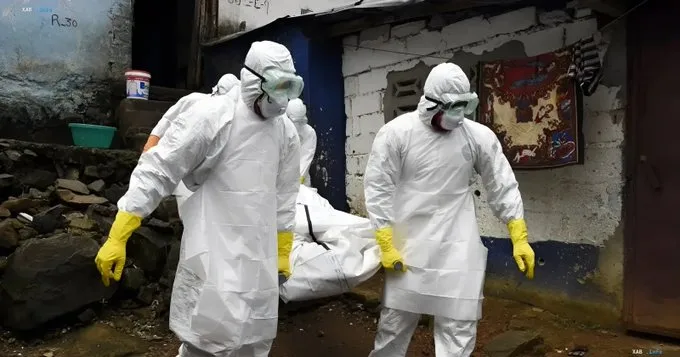
Amidst a suspected plague outbreak in Siberia, Russian authorities urgently identified 200 individuals who had been in contact with the deceased laboratory technician and implemented lockdowns and quarantine measures at five hospitals. (Image credit: X account @AlphaFoxCharlie).
Facing public speculation regarding pneumonic plague, Russian officials ultimately classified the cause of death as "pneumonia of unknown origin" rather than plague. Nevertheless, following Shipilova's death on 2 October, local health authorities immediately launched contact tracing; reports suggest that the number of individuals placed under medical observation ranged from several dozen to nearly 200, with relevant medical facilities implementing quarantine and preventive protocols. Regarding the testing of contacts conducted so far, officials have only reported positive results for COVID-19 and rhinovirus; no confirmed cases of plague have been announced. According to the X account @Visegrad24, nations including Kazakhstan, Uzbekistan, Kyrgyzstan and Mongolia have implemented various health and quarantine measures at border crossings with Russia, fearing that a potential pneumonic plague outbreak in the Irkutsk region—possibly stemming from a biological laboratory accident—could spread beyond Russian borders. There is widespread skepticism regarding these unusual developments within Russia. The X account @Jason Jay Smart alleges that Russia is scrambling to cover up a deadly plague outbreak; while officials publicly claim it is merely pneumonia, the strict quarantine measures suggest an attempt to conceal the truth. The account further suggests that Moscow hopes the domestic biological crisis will divert international attention from its mounting losses on the battlefield in Ukraine.
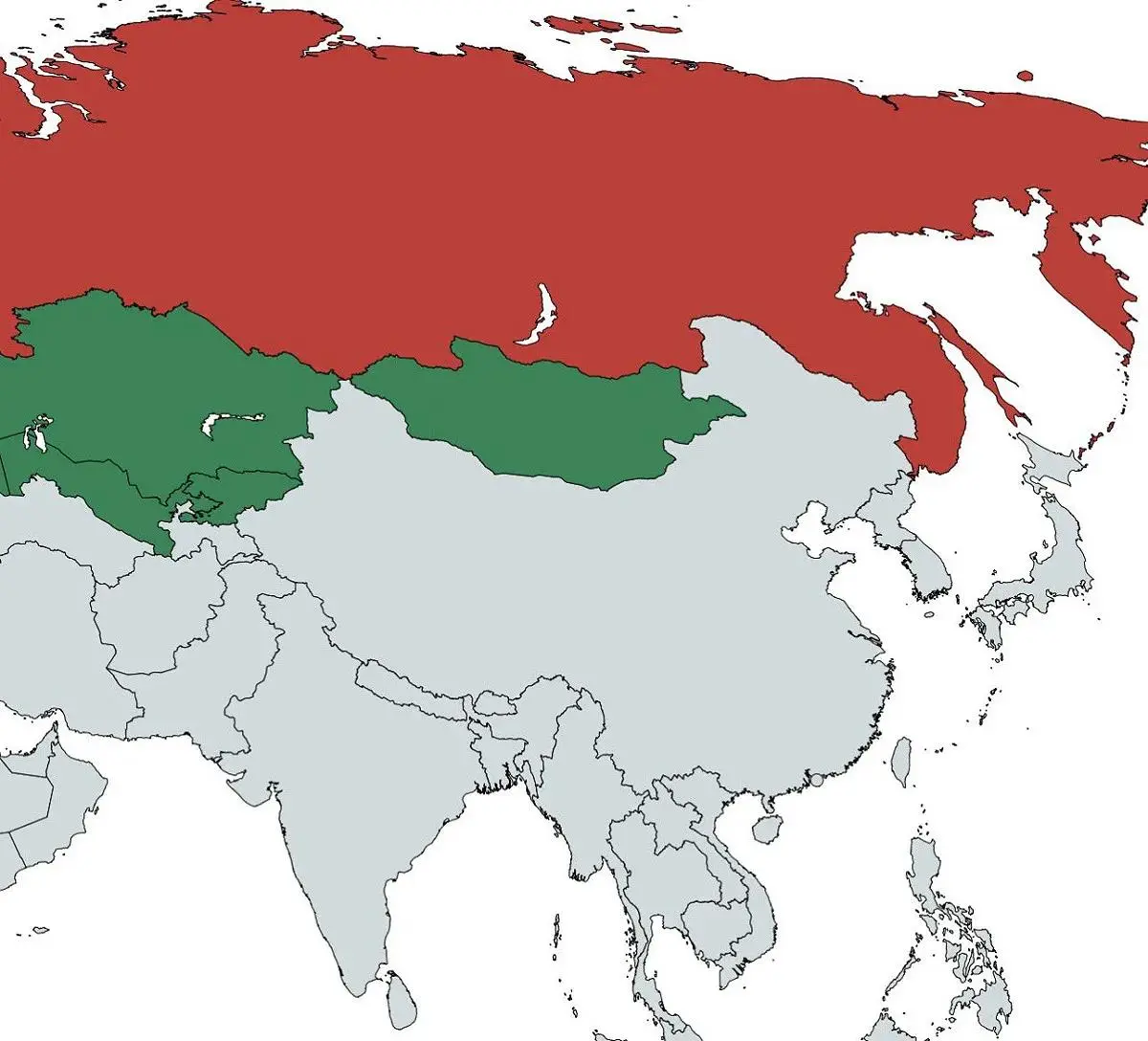
The countries in green are urgently sealing their borders with Russia to prevent the spread of the plague. (Image: via @visegrad24)
Additionally, X accounts @yeyusam1 and @911NewsBreaks have reported rumours of a potential lockdown in St. Petersburg due to a plague outbreak, though Russian media has not provided official confirmation, stating only that the situation is under control. Regarding testing, the U.S. outlet *Axios* reported that individuals who had contact with the Russian laboratory worker—who is suspected to have died from pneumonic plague—have all tested negative.
X account @MarkDeReborn11 cited an official statement from Marco Rubio noting that the U.S. is closely monitoring the pneumonic plague outbreak in Russia though currently, the only available information comes from Russian authorities.
When asked by the media if he was concerned about the outbreak in Russia, U.S. President Trump responded that it was a disease humanity had previously been able to control but somehow, the microbes had become stronger and smarter—acting like an army—and that the United States would offer assistance to Russia. Trump's remarks immediately prompted the social media account @realidad_int (on X) to question exactly what inside information the U.S. possessed regarding details Russia was still concealing. The true nature of this laboratory accident in Russia remains a matter for the international community to continue monitoring and clarifying.

Darya Shipilova, a 28-year-old female staff member at the anti-plague research institute. (Photo: Via @IntCyberDigest)
Russian plague outbreak could be worse than the Black Death! Former U.S. presidential envoy reveals details from a Soviet bioweapons defector
—White House Monitoring Closely: Mysterious Russian pneumonia could be "more serious" than a plague
Editor in Charge: Fang Xun | Source: Fox / New Tang Dynasty Television (NTDTV) / https://www.aboluowang.com/2026/1007/2442504.html
A Soviet bioweapons defector told Marshall Billingslea that an antibiotic-resistant plague had once broken out at the same facility.
The unexplained death of a researcher at a Russian anti-plague institute has prompted a warning from a former senior U.S. military official that the situation could be "worse" than the bacterium that caused the Black Death.
Marshall Billingslea, who served as President Trump’s arms control envoy, stated that a high-ranking Soviet bioweapons defector told him decades ago that antibiotic-resistant plague was secretly being studied at the very same facility where the recent plague-related death occurred.
"This might not just be 'plague.' It could be worse," Billingslea wrote on X.
He spent much of the 1990s working on non-proliferation and arms control issues for the Senate Foreign Relations Committee—a period during which he worked with Ken Alibek, the number-two official in the former Soviet bioweapons program who had defected to the U.S.
Billingslea wrote: "He claimed they had engineered an antibiotic-resistant strain of plague and had studied plague chimeras (fusing two or more pathogens)."
"He specifically identified Irkutsk as being involved in the BW [bioweapons] program," he added.
Billingslea’s warning follows the death last week of a 28-year-old employee at the Irkutsk Anti-Plague Institute for Siberia and the Far East from pneumonia of unknown origin.
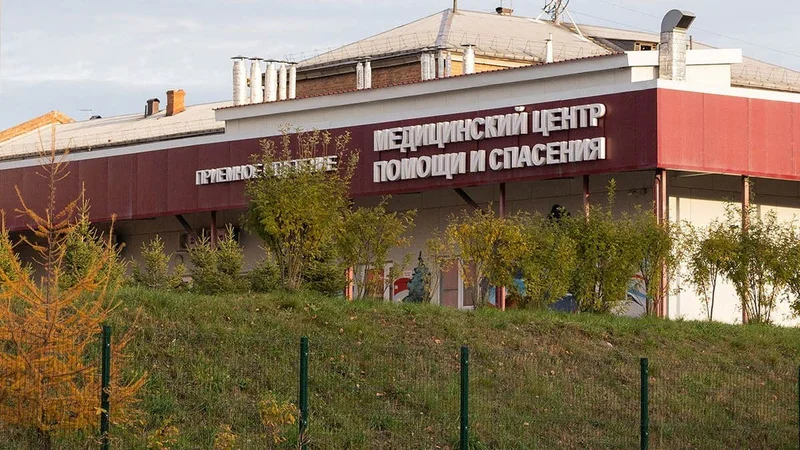
A view of the Medical Aid and Rescue Center—an infectious disease hospital—in the town of Shelekhov, Irkutsk region, Russia, on October 5, 2026. (Reuters)
Russian authorities have not stated that the woman died of plague and indicated that tests did not detect any microbes related to her work in her system.
The World Health Organization (WHO) said on Tuesday that Russian officials informed the agency that no plague or other high-threat pathogens were detected in her close contacts, though they are still awaiting confirmation of the cause of her fatal pneumonia. Questions Raised by Accidental Death of Defense Ministry Scientist; Investigation into Missing Scientist Deepens
According to Russian authorities, approximately 60% of the women identified as contacts have been tested; results showed two cases of COVID-19 and two cases of rhinovirus infection, but no other infectious disease pathogens were detected.
Nevertheless, this unexplained death at a facility handling dangerous pathogens has raised concerns among biosafety experts—including questions regarding why the cause of death remains unknown.
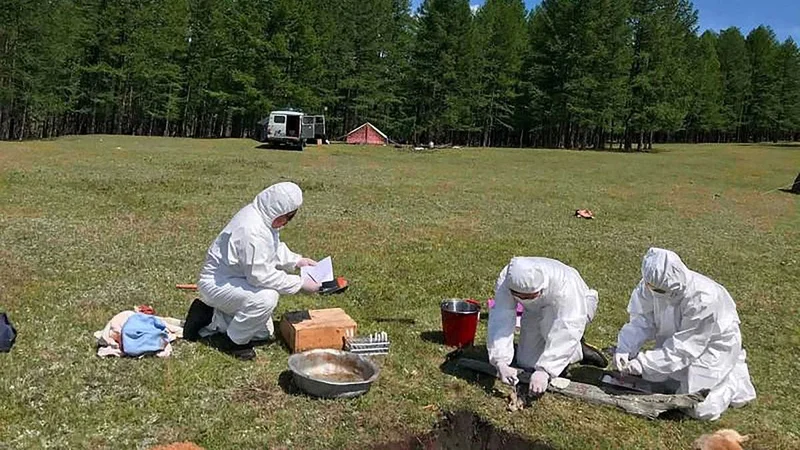
Staff wearing protective gear conduct testing and implement enhanced safety measures in Russia following the death of an employee at a Siberian disease-control research institute. (Image : Khuvsguliinungu.mn/e2w)
Kevin Esvelt, an MIT professor specializing in biosafety and the risks of catastrophic pandemics, stated that Russia's latest explanation suggests the researcher did not die of the plague, though the actual cause of her death remains unanswered.
"If we take the Russian authorities at their word, it wasn't the plague," Esvelt wrote on Tuesday.
He added, "But untargeted, research-grade sequencing can reliably identify pathogens, and very few people die of pneumonia without an identifiable pathogen—let alone a 28-year-old." "It would be strange if they didn't know the cause."
Esvelt warned that more concerning explanations remain merely hypothetical.
"The worrying possibilities remain just that—possibilities," he wrote.
Questions surrounding this death arise against the backdrop of the Soviet Union's well-documented history of secretly developing biological weapons (including weaponized plague) and U.S. assessments indicating that parts of the program persisted after the Soviet collapse.
In its 2025 report on arms control compliance, the State Department assessed that Russia maintains an offensive biological warfare program in violation of the Biological Weapons Convention, noting that the Soviet program was "absorbed rather than dismantled" following the USSR's dissolution.
The department stated that the program "persisted and evolved into the Russian Federation era," with Moscow continuing activities prohibited by the convention. Russia has repeatedly denied maintaining an offensive biological weapons program. U.S. assessments have neither established nor confirmed any link between Russia's biological weapons program and the death of the researcher in Irkutsk.

Darya Shipilova, a 28-year-old employee of the Irkutsk Anti-Plague Institute in Siberia and the Russian Far East, died of pneumonia of unknown origin, prompting the region to implement quarantine and heightened sanitary precautions. Russian authorities stated that testing found no evidence linking her illness to the pathogens she handled. (Image : East-West News)
The Soviet program mentioned by Billingslea was one of the world's largest covert biological weapons operations. Alibek—born Kanatjan Alibekov—rose to become the first deputy director of the biological agent organization; this network was ostensibly civilian but was actually a key component of the Soviet biological weapons system. He defected to the United States in 1992.
After defecting, Alibek provided U.S. officials with extensive information regarding the scale and capabilities of the Soviet program. He described how Soviet scientists worked to weaponize pathogens—including the plague—and developed antibiotic-resistant strains.
His claims regarding certain aspects of the Soviet program have faced scrutiny over the years, making the preservation of independent documentation particularly important. However, the existence and vast scale of the Soviet biological weapons effort—despite Moscow ratifying the Biological Weapons Convention in 1975—are widely acknowledged.
The Irkutsk Institute states that it was founded in 1934 as a scientific and operational center for combating the plague. Its mission later expanded to cover other highly dangerous diseases, including cholera and anthrax; today, it describes itself as a research and disease-control facility dedicated to protecting the region from infectious diseases.
The Trump administration stated that it is closely monitoring the situation and has urged Moscow to be more transparent about the incident.
Secretary of State Marco Rubio said on Monday that although communication between the U.S. and Russia remains limited, an infectious disease could spread rapidly beyond Russia's borders.
"If this kind of thing gets out, it could spread quickly," Rubio said. President Donald Trump stated that the United States would provide assistance to Russia if needed.
"I hate to see them going through that," Trump told reporters on Monday. "It's a very serious disease."
A laboratory worker recently died after contracting an infection at the Irkutsk Anti-Plague Institute in Russia. A former senior U.S. official noted that, given the institute's ties to the former Soviet Union's biological weapons program, this "outbreak" is deeply unsettling, and the possibility that it involves more dangerous pathogens cannot be ruled out.
On 6 October 2026, Marshall Billingslea—who served as President Trump’s Special Presidential Envoy for Arms Control—posted a series of messages on the social media platform X regarding the incident at the Irkutsk Anti-Plague Institute.
Billingslea worked for the U.S. Senate Foreign Relations Committee in the 1990s, handling issues related to weapons proliferation and arms control. During that time, he collaborated with Ken Alibek, the former number-two official in the Soviet biological weapons program who later defected to the United States.
Billingslea noted that Alibek had pointed out the Soviet Union had developed antibiotic-resistant strains of the plague bacterium and had also researched "plague chimeras"—pathogens created by fusing two or more different pathogens together. Furthermore, "he specifically noted that Irkutsk was involved in the Soviet biological weapons program."
Billingslea wrote: "This outbreak is deeply concerning; it may not be just 'plague'—the situation could be far more serious than the plague."
He later added in another post that in 1992, Russian President Boris Yeltsin admitted the Soviet Union had possessed a biological weapons program. Months later, Frank Wisner—then Under Secretary of State—led a U.S. delegation to Moscow to demand that Russia publicly disclose details of its biological weapons program, but Russia never did so. Declassified talking points from Vissner highlight Russia’s plague-based weaponry—including the use of "genetic engineering and other technologies"—and research aimed at "rendering the plague bacterium resistant to antibiotics and making the pathogen more suitable for weaponization."
The documents do not explicitly name the Irkutsk institute but indirectly categorize it as part of the "former Soviet Union's anti-plague infrastructure," noting that such facilities were utilized to develop biological warfare pathogens.
"Russia needs to release details regarding the pathogen that caused Darya Shipilova's death, as well as whether the Irkutsk laboratory where she worked is currently conducting offensive biological weapons activities," wrote Billingslea.
Russian state media reported that 28-year-old laboratory technician Darya Shipilova fell ill on 25 September after breaking a test tube allegedly containing the pneumonic plague pathogen; she was subsequently hospitalized in Shelekhov and died three days later. Russian authorities claimed she died of "pneumonia of unknown origin." Reports indicated that five local hospitals were placed under lockdown and hundreds of people were quarantined due to the "outbreak." The Trump administration stated it was closely monitoring the situation and urged Russia to increase transparency.
According to Fox News, the Soviet program mentioned by Billingslea was one of the world's largest covert biological weapons programs. Before defecting to the United States in 1992, Alibek (born Kanatjan Alibekov) served as the first deputy director of Biopreparat, the Soviet biological weapons agency. Although ostensibly a civilian organization, Biopreparat was in reality a critical component of the Soviet biological weapons infrastructure.
Following his defection, Alibek provided U.S. officials with extensive information regarding the scale and capabilities of the Soviet weaponization program, including details on how Soviet scientists weaponized pathogens—such as the plague—and developed antibiotic-resistant strains.
WHO claims no transmission, yet Inner Mongolia issues Sudden Plague Alert; Hospital report reveals "Thousands of Cases"
Reporter : Wang Duruo / Editor: Zhongkang / https://www.aboluowang.com/2026/1012/2444685.html
On 2 October 2026, a 28-year-old female staff member at the "Siberian and Far Eastern Plague Control Research Institute" in Irkutsk, Russia, passed away due to "pneumonia of unknown origin." Russian authorities stated that thousands of tests failed to detect dangerous pathogens and denied the existence of a second case; the World Health Organization (WHO) stated on the 10th that no evidence of sustained transmission had been found. However, public concern persists as Russia continues testing without identifying the pathogen, and exposure linked to laboratory work cannot be entirely ruled out. Mongolia has implemented health monitoring at its border with Russia, while some Chinese nationals in Russia are panic-buying face masks and returning home to wait and see how the situation unfolds.

On 10 October 2026 —the same day the WHO issued its bulletin—the Center for Disease Control and Prevention in Hulunbuir, Inner Mongolia, released a "Risk Advisory for Plague Prevention and Control." It noted that the city had not seen a human plague case since 1927, recent monitoring had detected no plague among rodents, and the likelihood of an outbreak was low. However, as Hulunbuir is a natural plague focus area adjacent to the Russian Far East, the advisory urged individuals arriving from Russian plague-endemic regions to monitor their health and seek immediate medical attention if symptoms appeared. Writer Cui Chenghao quipped: "When a child says they need to poop, they’ve likely already soiled their pants."
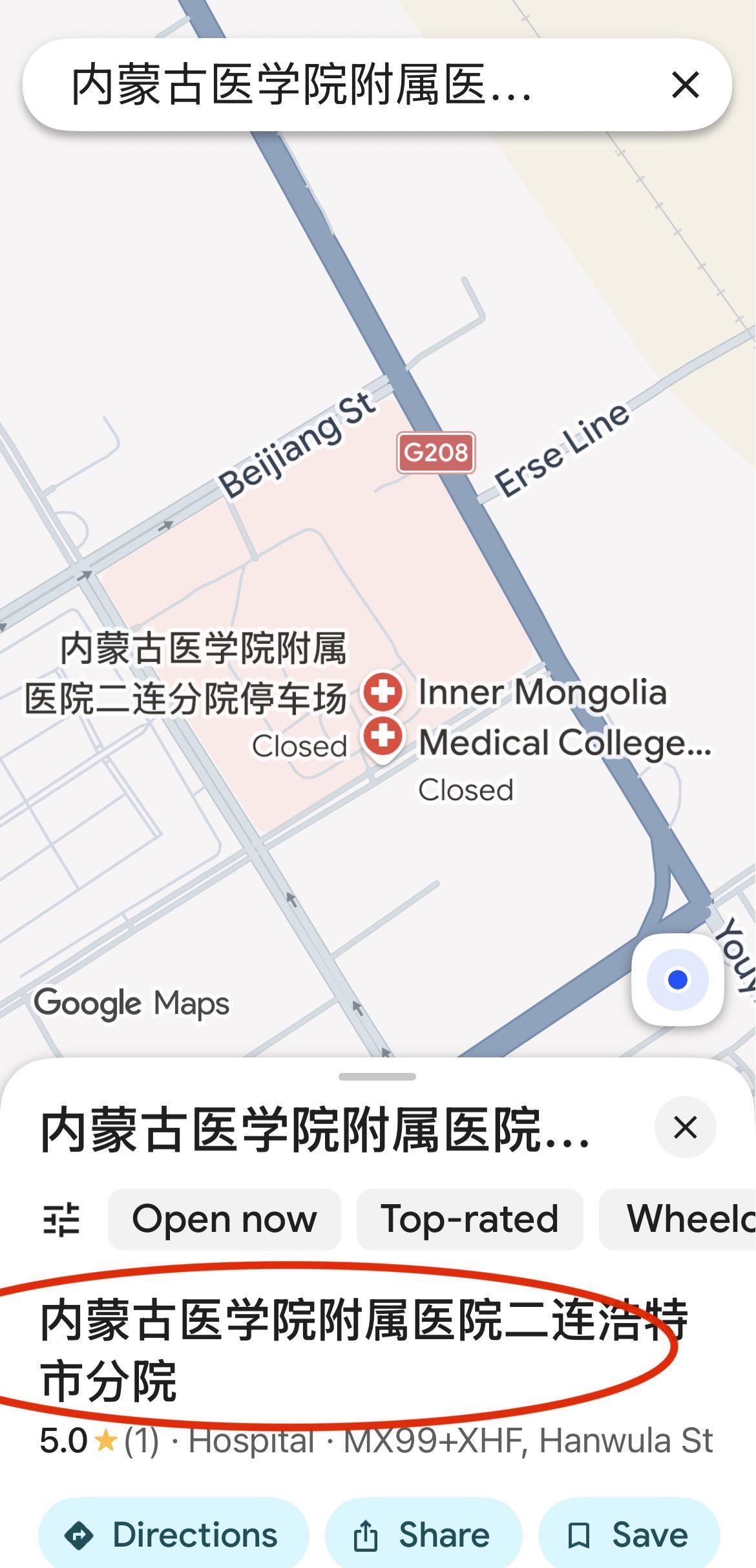
Subsequently, at 12:58 pm U.S. time on 10 October (1.58 am Beijing time on the 11th), an overseas X (formerly Twitter) user named "Luo Xiang—Breaking the Curtain and Wall" posted an anonymous submission—garnering 1.879 million views—allegedly from an "insider at the Affiliated Hospital of Erenhot Medical College." The post claimed that the hospital had admitted over 70 plague patients, resulting in more than 40 deaths, with some bodies cremated without notifying families; over a dozen doctors were infected, and three had died; thousands of cases had already emerged in Hohhot, Chifeng, Tongliao and Baotou; antibiotics were being panic-bought, and hospital leadership was stockpiling medication at home while maintaining a unified public stance of "never having admitted any patients." The facility referred to is likely the "Erenhot Branch of the Affiliated Hospital of Inner Mongolia Medical College"; Google Maps confirms the institution's existence, and Erenhot is a border city between China and Mongolia. Wang Duran, a commentator for *Aboluowang*, observes that the submitted screenshot lacks a date; there is no secondary source to cross-verify the claim of "thousands of cases," and currently, no other official or independent evidence exists. Plague can be treated with antibiotics in its early stages. Inner Mongolia is indeed a natural plague focus area, and officials reported human plague cases there in November 2019.
Public reaction is calmer than online rumours suggest, yet tinged with unease. Yang Ming (pseudonym), a man from Harbin, told *The Epoch Times*: "I asked a friend in Irkutsk; he said the local situation is under control, but no one knows the real story. To be honest, this is just what’s been reported—ordinary people wouldn't know about anything that hasn't been made public." Da Peng (pseudonym) from Hailar, Inner Mongolia, said he bought 500 KN95 masks as a precaution: "If an outbreak really happens, I’ll just need masks and rubbing alcohol for when I go out to buy groceries. Right now, very few people here are wearing masks, so it's hard to tell; we'll have to see what happens in December."
Close people-to-people exchanges between China and Russia form the backdrop of this concern: China and Russia have implemented visa-free policies for each other's citizens (effective September 15 and December 1, 2025, respectively); cross-border travel exceeded 3 million trips in 2025, with a 43% year-on-year increase in the first half of this year, making Russia the second-largest source of inbound tourists to China.


No comments:
Post a Comment