Report by : Gan Yung Chyan, KUCINTA SETIA Image : Web Screenshot
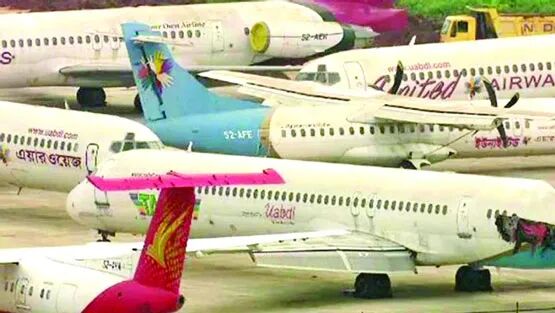
After years of legal proceedings, the Civil Aviation Authority of Bangladesh (CAAB) has decided to auction off 12 obsolete aircraft to reclaim valuable operational space at Dhaka Hazrat Shahjala International Airport and improve cargo handling efficiency.
CAAB is both the owner and operator of the airport, responsible for its daily operations, aviation safety, air traffic management, infrastructure development, and business management.
These aircraft, parked on the airport's cargo apron for nearly a decade, are severely aged and unusable. CAAB is seeking government approval to dispose of these aircraft through a no-reserve international open tender.
United Airways was reportedly the first airline to abandon its aircraft on the airport's cargo apron, and other airlines followed suit due to CAAB's lack of action, turning the apron into an aircraft graveyard.
The obsolete fleet includes eight United Airways aircraft, two Regent Airways aircraft, and one each from GMG Airlines and Angel Airways. These aircraft occupy approximately 192,100 square feet of apron space, hindering aircraft parking, cargo operations, and future airport expansion.
According to airport officials, United Airways, Regent Airways and GMG Airlines owe CAAB a total of 7.5 billion taka in various fees. Specifically, United Airways owes 1.9 billion taka, GMG Airlines owes 3.6 billion taka, and Regent Airways owes 2 billion taka. CAAB has repeatedly sent letters demanding payment, but has received no response.
CAAB Director General Mohammed Mahabpur Siddiqui submitted a proposal to the Bangladesh Ministry of Civil Aviation and Tourism on 16 July 2026, requesting permission to dispose of these aircraft through a competitive international auction.
Airport operations under pressure
Airport officials stated that these aircraft have been occupying the cargo apron for an extended period, limiting parking capacity, interfering with export cargo handling, and reducing the operational efficiency of Hazrat Shahjala International Airport.
These aircraft have already lost their airworthiness certificates and have been deregistered. After repeated unsuccessful attempts to persuade the airlines to remove the aircraft, CAAB, through legal proceedings and in consultation with the Attorney General's Office, the Bank of Bangladesh, and relevant lending institutions, formally seized the aircraft on 26 May 2024.
Scrapped sale seen as a pragmatic option
CAAB's Administrative and Planning Officer, Abu Syed Mehb Khan, stated that attempts to determine an internationally recognized reserve price were impractical due to Bangladesh's lack of qualified aircraft valuation agencies and the potential cost of hiring foreign experts exceeding the aircraft's expected selling price.
"These aircraft have been idle for years, hindering airport operations," Abu said. "We have sought approval to invite international bids without a reserve price, as the cost of determining their value could exceed the proceeds from the sale. They have essentially become scrap."
Airport sources stated that long-term exposure to the natural environment has severely damaged most of the aircraft; corrosion and component aging have rendered them practically only valuable as scrap metal or recyclable spare parts.
Experts call for urgent removal
Aerospace experts say that parking abandoned aircraft on the tarmac of one of Bangladesh's busiest airports reduces the airport's operational capacity and costs the government potential revenue.
"The priority should be restoring the airport's operational efficiency," said Mofidur Rahman, former director of the CAAB. "A transparent international auction would not only free up valuable tarmac space but also ensure a competitive process that maximizes benefits for the government."
Aerospace analyst and editor of *Aviation & Tourism Magazine*, Kazi Wahidur Alam, also stated that Bangladesh's growing cargo and passenger demand requires more efficient use of airport infrastructure.
"Every square meter of tarmac space is valuable. Removing abandoned aircraft will improve aircraft scheduling, strengthen cargo operations, and support future expansion plans."
If approved by the Ministry of Civil Aviation and Tourism, the CAAB will invite international bids. The winning bidder will be required to remove the aircraft from the airport within a specified timeframe, paving the way for efficient use of tarmac space.


No comments:
Post a Comment