Direct translation
The CCP's lockdown measures extend to the physical body! Dark plans behind new entry and exit regulations exposed
Editor : Fang Xun / Source: Taibao / https://www.aboluowang.com/2026/0813/2420206.html
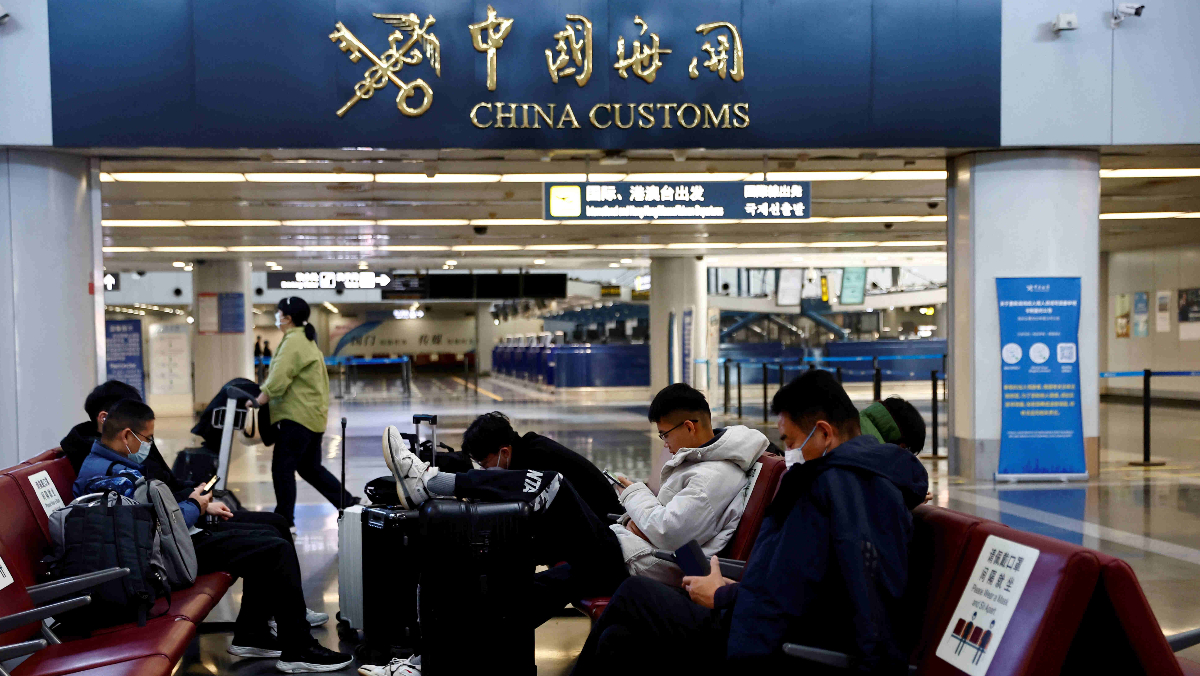
On 22 July 2026, China released the "Regulations of the State Council on Exit and Entry Management," detailing various situations in which exit is prohibited, effectively legalizing the previous "border control." Ming Ju-cheng, Professor Emeritus of Political Science at National Taiwan University, pointed out that China's current controls have become tangible, with Chinese citizens holding foreign citizenship not only unable to leave the country but also forced to renounce their foreign citizenship. He believes the underlying reason is related to the US-China technology war, aiming to retain technological and business talent, and there are even rumors of plans to create brain-computer interface super soldiers.
Ming Ju-cheng recently discussed the new Chinese exit and entry management regulations on the program "What Bao-jie Says." He said that although the new regulations are claimed to take effect on September 15th of this year, they have actually been in effect for some time.
Ming Ju-cheng cited the example of Gui Minhai, a shareholder of Causeway Bay Bookstore who obtained Swedish citizenship, who was arrested in China in 2018 and subsequently claimed to have renounced his Swedish citizenship. Earlier this year, a Chinese businessman who had been a naturalized Japanese citizen for 13 years was intercepted before boarding his flight to Japan, forced to renounce his Japanese citizenship, and restricted from leaving the country until 2036.
Ming Juzheng stated that China strictly controls its people, "in the past controlling money and technology, now even their bodies." Looking at the world, only North Korea does this, no wonder China is satirically called "West Korea."
China also strictly controls foreigners entering the country. Not only did former US President Obama find someone rummaging through his room when he opened it during his visit to China, but Ming Juzheng also mentioned that a female employee of the Straits Exchange Foundation (SEF) attended a meeting with the Association for Relations Across the Taiwan Straits (ARATS) in China. Upon returning to her hotel and turning on the tap, she found there was no water. Before she could even report it, she received a phone call: "You have no water? We'll send someone to fix it." Clearly, her movements inside the room were being monitored, so she had to get dressed and take a shower.
Look at Article 4 of the new regulations: If a Chinese citizen violates export controls or regulations on the import and export of technology that may endanger national industrial and technological security, the relevant departments of the State Council, such as the Ministry of Commerce, may decide to prohibit their departure from the country. Ming Juzheng said this shows that China's restrictions on talent leaving the country are related to the US-China technology war.
Ming Juzheng stated that China previously promoted the Thousand Talents Program to attract outstanding overseas scientists, including Charles Lieber, the former head of the Department of Chemistry at Harvard University. Lieber's brain-machine interaction project in Shenzhen, China, essentially involves implanting chips in the human brain. The stated goal is to enable the blind to see and the deaf to hear, but China's real concern is whether it can create super soldiers or superhumans—a terrifying notion.
After poaching foreign scientists, China is now worried about retaining its domestic scientists, fearing they might defect to foreign powers, hence the implementation of stricter immigration controls.


No comments:
Post a Comment