Direct translation
A bank manager's words reminded me: Remember these "4 Don'ts" for fixed deposits
Editor : Song Yun / Source: Slow Time in a Small Town / https://www.aboluowang.com/2026/0823/2424380.html / Images : Web Screenshots

In the past two years, more and more people around me have been putting their money in the bank.
It's not that people have suddenly become conservative; it's just that reality is what it is: the possibility of unemployment, medical expenses, the pressure of children's education, the anxiety of retirement… each one is like a fine needle pricking the heart of every ordinary family. Add to that the volatility of the A-share market, losses in funds, and the breaking of the implicit guarantee of principal and interest in bank wealth management products, and many people ultimately return to the most familiar option—fixed-term deposits.
But is fixed-term deposit really a "blindly depositing" option?
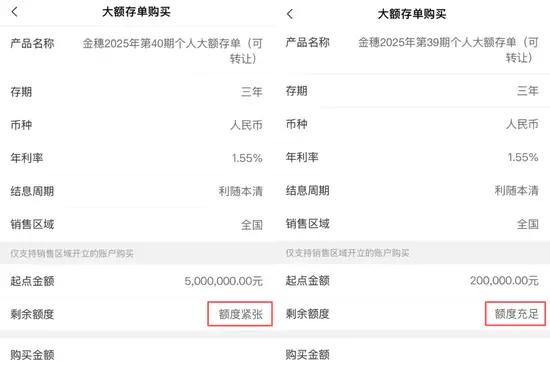
A bank manager with eight years of experience put it bluntly: In the future, the biggest fear with fixed-term deposits won't be low interest rates, but rather not understanding the rules and falling into traps while thinking it's just "bad luck." He summarized four things to avoid with fixed-term deposits, and many people have unfortunately fallen into these traps.
Below are four points you should carefully check to see if you've made any of them.
1. Don't blindly chase high interest rates: High interest rates may hide risks you can't see.
Currently, the difference in fixed-term interest rates between large banks and small and medium-sized banks is indeed significant:
Some small and medium-sized banks can offer 3% for three-year fixed deposits, while large banks often only offer slightly over 2%.
(Aboluowang Editor's Note: Current deposit interest rates in China have entered the "1% range" era. China Construction Bank's posted rates are: 0.05% for current accounts, 0.95% for one-year terms, 1.25% for three-year terms, and 1.30% for five-year terms. Actual rates vary depending on the specific product. A survey conducted by China Construction Bank in August 2026 showed that some private banks' three-year products offered rates of approximately 1.95% to 2.09%, with some exceeding 2%; some rural banks offered rates of approximately 1.58% to 1.90%. The previously common "3% fixed deposit" is clearly outdated, CNR.cn reports)
The problem is that higher interest rates do not necessarily mean "more cost-effective," nor do they necessarily mean "safer."
In recent years, many small and medium-sized banks have indeed been merged or restructured due to operational issues. If you deposit a large sum of money for a high interest rate, the worst part isn't the lost interest, but the anxiety of not being able to sleep soundly when you start worrying about the safety of your money—an anxiety that interest rates simply cannot compensate for.
Ultimately, depositing money is about peace of mind. Don't sacrifice your mental well-being for a little extra interest.
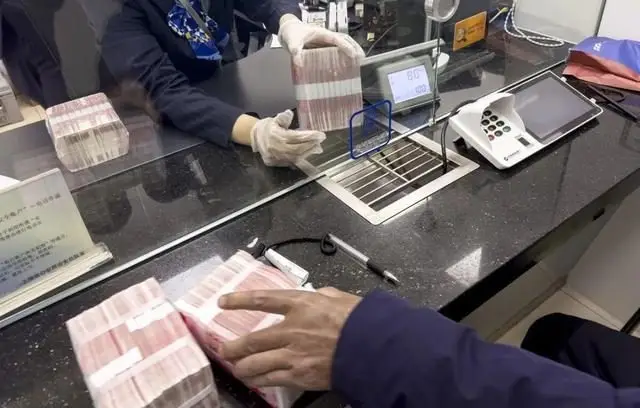
2. Don't ignore the deposit term: too short and you won't earn anything, too long and you won't need the money, and any action you take will result in a loss.
Many people focus solely on one point when depositing in fixed-term accounts: the longer the term, the higher the interest rate.
However, bank managers offer a realistic warning: choosing the wrong term often leads to losses in two directions.
Too short a term: the interest rate is pitifully low, tying up your funds with very limited returns;
Too long a term: for example, a 5-year deposit may seem to offer a high interest rate, but if you urgently need the money and withdraw early, the interest rate will often be only equivalent to that of a current account, resulting in a more significant loss.
What's truly agonizing is the feeling of "the money is there, but I can't touch it." If an emergency occurs at home, you'll find that fixed-term deposits aren't "impossible to withdraw early," but rather that "early withdrawal makes your previous commitment seem worthless."
Therefore, before depositing, ask yourself: am I really sure I won't need this money within this period?
Unless the answer is 100% certain, don't extend the term too much.

3. Don't put all your money in fixed-term deposits: Fixed-term deposits are stable, but they lock up your life's flexibility
Many people interpret the "stability" of fixed-term deposits as "the safest," so they simply deposit all their money in them at once.
This is precisely the most common and most regrettable way to save.
The characteristic of fixed-term deposits is locking up funds—they are stable, but inflexible. If you lock up all your money, you'll immediately be in a passive position if you need to access funds in an emergency: either withdraw early and lose interest, or borrow money everywhere to tide you over, feeling frustrated and even tighter on cash.
The advice from bank managers is actually very simple: allocate your money reasonably.
Put a portion in fixed-term deposits for stable returns, and keep a portion in liquid cash to deal with emergencies.
This isn't about taking risks, but about having a "contingency plan." True security is never about locking up your money, but about being able to access, manage, and withstand any situation.

4. Don't easily believe in "deposits turning into insurance": You think you're saving money, but you're actually buying something else
This is the point that many people fall into the most traps with, and the one they find hardest to admit.
Some bank employees package insurance as "high-interest deposits," using similar sales pitches:
"Higher returns than fixed deposits," "More cost-effective," "Very safe," "Get your money back when it matures."
However, once you buy it, you might find that the returns don't meet your expectations; more importantly, early surrender often results in a significant loss. Every year, many people fall victim to this, only realizing afterward that they thought they were making a deposit, but they actually bought an insurance product.
Therefore, you must remember this:
You can accept lower returns, but you cannot accept "buying something without understanding what you've bought."
At the counter, anything that looks "like a deposit" should be thoroughly investigated to determine whether it is a fixed deposit, insurance, or other investment product. Don't let embarrassment lead to years of regret.

Remember these "4 Don'ts," and you've already won half the battle in fixed deposits.
Combining these four points, you'll find they all share one common thread:
Don't let "wanting to save time" turn into "unwittingly taking on risk."
Not chasing high interest rates is to avoid jeopardizing your financial security by relying on the success of others' businesses;
Not ignoring the term is to prevent future financial needs from forcing you to withdraw funds early;
Not putting all your money in fixed-term deposits is to leave room for cash flow in your life;
Not treating savings as insurance is to avoid being taken advantage of due to information asymmetry.
The material also clearly states: Banks adjust deposit rules ultimately to protect depositors' rights but no matter how the rules change, the most crucial thing is for you to "understand, ask questions, and act responsibly."


No comments:
Post a Comment