Direct translation
Shocking HIV/AIDS Risk Alert in Guangdong! 50 million people may be affected, Doctor reveals inside story
Reporter, editing : Zheng Haozhong / https://www.aboluowang.com/2026/0819/2422887.html / Image : Web Screenshot
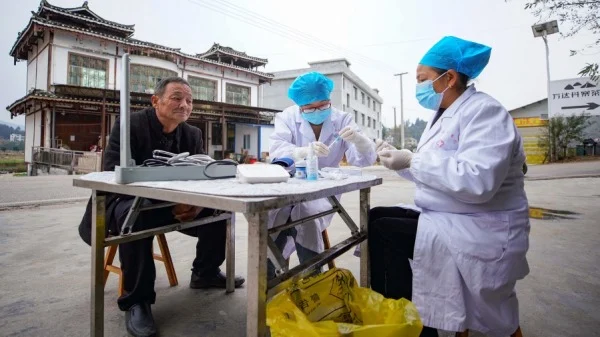
A screenshot, purportedly from a mainland doctor, quickly spread after being reposted by the X account "Luo Xiang - Breaking the Curtain and Pushing Down the Wall." The screenshot claims that at 119 community health stations in Foshan recently set up for chikungunya fever screening, the blood-collecting personnel were mostly hired workers paid 100 yuan per day, not medical staff. The report alleges that last year in Guangzhou, due to HIV-positive blood-collecting personnel, poor management, and reused needles, over 70,000 new HIV infections were identified, and another 30-40 million people remain at risk of infection without clear screening results. The whistleblower questions why such a large-scale public health disaster was suppressed, suggesting problems with equipment and procedures, or that vested interests controlled related aspects; and criticizes the regulatory authorities' consistent approach of suppressing, delaying, and ultimately letting things slide. While the 50 million figure may be exaggerated, the underlying regulatory gap is real. The news has sparked strong reactions online, with some calling it "hell on earth" and others lamenting, "As long as the devil lives, the disaster will continue."
Meanwhile, official data also reveals real concerns. The Chongqing AIDS Prevention and Control Publicity and Education Network cited a report released by the Chinese Center for Disease Control and Prevention in February 2026, stating that in January of that year, there were 2,805 new AIDS cases and 1,649 deaths nationwide, equivalent to an average of over 50 deaths per day. By the end of 2025, the number of people living with HIV/AIDS in China had exceeded 1.41 million. The report pointed out that sexual contact has become the main route of transmission, with heterosexual transmission accounting for 72.8% and homosexual transmission accounting for 25.7% of newly reported cases in 2025. The male-to-female infection ratio is approximately 3.5 to 1, and the proportion of middle-aged and elderly people is continuously rising; in the first half of 2025, people over 50 years old accounted for over 40% of newly reported cases.
The *Yangcheng Evening News* previously reported on the rising trend of HIV infection rates among the elderly in China. Radio Free Asia quoted a former head of the medical assistance department of the China Red Cross Foundation as saying that this trend has been evident since around 2015 but has long been neglected. Huang Yanzhong, a senior fellow at the Council on Foreign Relations, analyzed that before 2010, HIV transmission in China was mainly through blood selling, which easily attracted media attention. However, the transmission pattern has fundamentally changed, with the increasing number of elderly infected individuals becoming the most prominent challenge.
Academic research also confirms this trend. A systematic review and meta-analysis published in *Microbiology* in 2020 showed that in Chongqing, the proportion of people aged 50 and above among HIV-infected individuals rose from 27% in 2011 to 58.4% in 2019; in Guangxi, 46% of newly reported cases in 2014 were men over 50 years old. In an interview in December 2024, relevant personnel from the Guangdong Provincial Center for Disease Control and Prevention revealed that people over 60 years old accounted for approximately 20% of newly reported cases in Guangzhou in 2024.
According to a report by the official Chinese state media, CNR, as of 30 June 2024, there were over 1.32 million people living with HIV/AIDS in China, exceeding the approximately 1.2 million infected individuals in the United States, accounting for nearly one in a thousand of the total population. Huang Yanzhong believes that the officially released figures are likely lower than the actual scale of infections, as many infected individuals are only diagnosed when their immunity is weakened and they seek medical attention for other complications. Furthermore, the elderly generally do not proactively get tested for HIV. In some regions with systematic statistics, the proportion of newly reported elderly AIDS patients has risen from 22% in 2011 to 44% in 2020. Huang Yanzhong points out that the rising infection rate among the elderly is both a microcosm of China's accelerating aging population and exposes significant shortcomings in the elderly care system regarding sexual health and disease prevention.
Tian Haoyu of Aboluowang analyzes that from the chaotic blood collection practices in Foshan to the surge in elderly AIDS cases, the same governance logic is exposed: data can be embellished, responsibility can be diluted, but human life is systematically treated as a consumable cost. When a regime relies on temporary workers and silence to maintain even basic medical safety, it is never protecting the people, but rather the dignity of power itself.
Aboluowang commentator Wang Duran added: "The extent to which the CCP's HIV data has been understated is likely no less than the falsification of COVID-19 death tolls—both relied on limiting testing and local cover-ups to keep the number of infections within a politically acceptable range. The officially reported 1.41 million is likely just the tip of the iceberg."
Wang Duren pointed out: "When a regime is unwilling to spend money to hire professional medical personnel to draw your blood, how can the infection numbers it reports be true?"


No comments:
Post a Comment